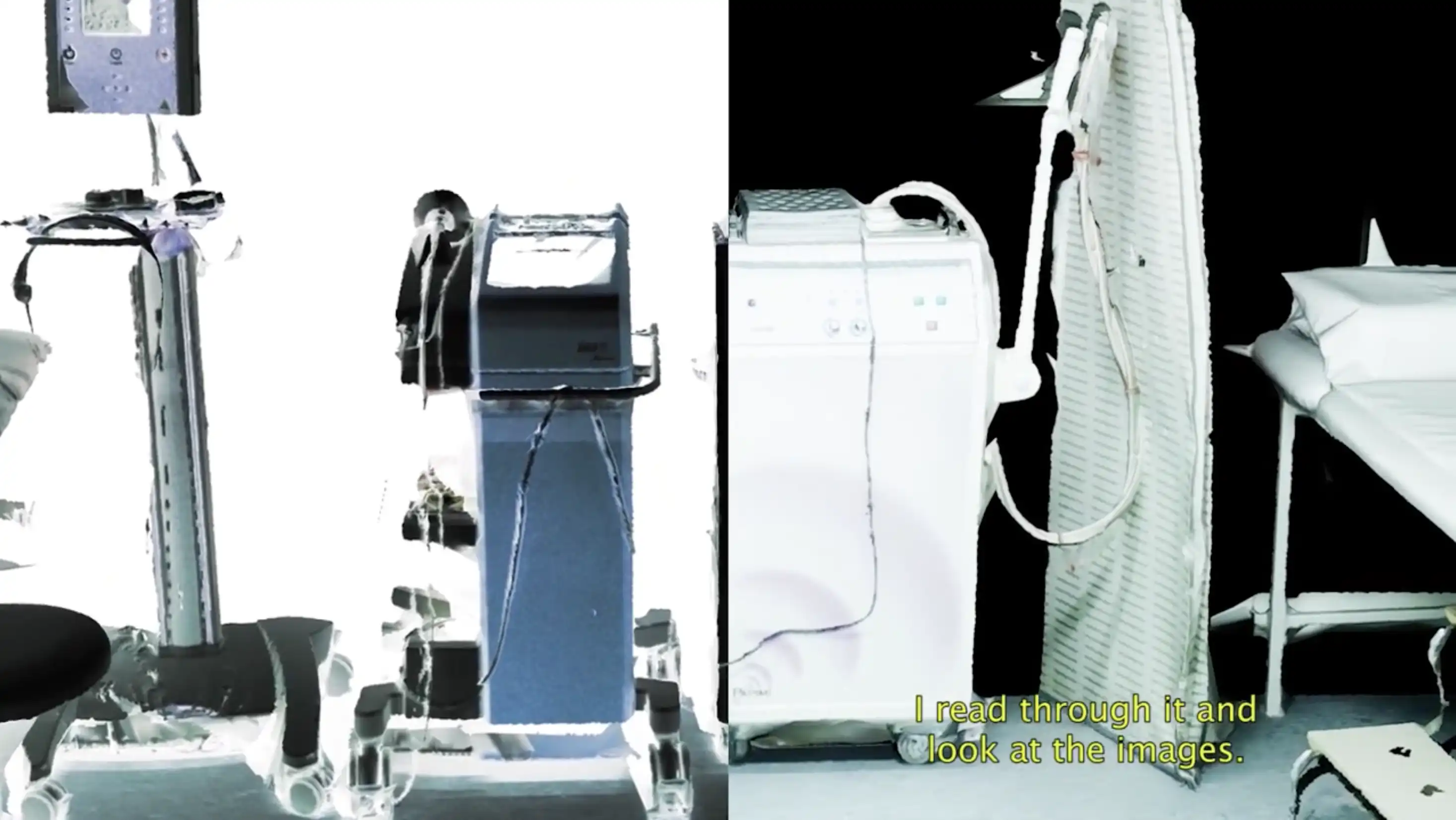
The video essay Geography of Ghosts builds upon five years of social science research on refugee health in Vienna, Austria. Using ethnographic methods, individuals who filed asylum claims around 2015 were repeatedly asked about their health and accompanied to their medical appointments. Geography of Ghosts explores this research through visual cinematic means, creating new knowledge about how place shapes health and illness. It combines personal narratives with spatial data staged in a real-time game engine. A digital arrangement of 3D LiDAR scans documenting a doctor’s office, asylum accommodations, and public spaces in the city of Vienna, unfolding through the gaze of a restless floating camera eye.
The video essay is accompanied by a text-based contribution that provides context and offers theoretical references for critical scholarship on biopolitical governance, colonial haunting and ocular ethics. It also engages in critical reflections on how Geography of Ghosts engages in resistant practices of meaning-making around refugee health, focusing on (i) the ethics of visual representation, (ii) the layered meanings of ghosts and in/visibility, and (iii) the affective aesthetics of LiDAR as a particular form of machine vision with a cold procedural gaze that echoes medical and bureaucratic regimes.
This transdisciplinary work positions artistic research—and in particular, the experimental use of LiDAR as a medium for engaging with the haunted, layered, and politically charged nature of space—as a means to generate valuable epistemic contributions that can complement and extend established social science and anthropology methods.
Key Words transdisciplinarity, artistic research, representation, healthcare, migration
Geography of Ghosts: A LiDAR Video Essay on Refugee Health and In/Visibility
(Published March 27, 2026)
Abstract
Preface
This text serves as an introduction to the video essay, Geography of Ghosts, which forms the core of our contribution. It is the outcome of our artistic research project, GEOGRAPHY OF GHOSTS, which brings together our respective backgrounds in the social science (Wanda) and experimental architecture (Dominic). Following Giaco Schiesser’s (2015) description of the epistemological position in artistic research, we deliberately refrained from offering a definitive interpretation of the video essay. Instead, we view it as a statement in its own right—one that cannot be fully captured or translated into the text medium. In this sense, the work aligns more closely with anthropological filmmaking as an expressive and epistemic form (even though our video essay sits at the more experimental end of that spectrum) than with visual anthropology, which uses film primarily to advance analytical claims. We use this contribution as an opportunity to share the background of Geography of Ghosts and to outline our perspective on its theoretical implications and possible readings.
First, we discuss the genesis of the video essay—on the one hand, as a continuation of five years of social science research on refugee health in Vienna, Austria, through ethnographic engagement; on the other hand, as a cinematic experiment using 3D LiDAR scans rendered within the real-time environment of Unreal Engine. Next, we briefly describe the composition of the video essays. Third, we situate the video essay as an empirical and theoretical work that extends from biopolitical analyses of medical imaging technologies to broader debates on the governance of refugee lives in contemporary Europe and beyond. We introduce selected approaches and explore how they resonate with or are expanded by the specific aesthetics and qualities of the video essays. These reflections draw on our own understanding of Geography of Ghosts as well as on conversations we had with visitors at the three exhibitions where the video essay was shown.
Genesis
Spatialising Social Science Research on Refugee Health
Geography of Ghosts builds upon the first author’s five-year social science research on refugee health in Vienna, Austria (Spahl 2023a; 2023b; 2024; Spahl and Prainsack 2021). Between 2018 and 2020, Wanda followed the health and illness experiences of refugees in Austria through ethnographic methods. She conducted qualitative interviews with seven refugees at multiple points in time, alongside observations before, during, and after their medical appointments as well as during various other situations. The participants, who arrived in Austria around 2015, held various legal statuses, including Afghan, Beninese, and Somali asylum seekers, as well as Syrians with recognised refugee status. To contextualise their experiences, she interviewed doctors, social workers, political representatives, and other professionals involved in refugee care.
In 2015, many people sought protection in Europe because of the Syrian Civil War. That year, Austria (population 8.5 million) received 88,340 asylum applications—primarily from Syrians, Iraqis, and Afghans—placing it among the countries with the highest per capita asylum rates in Europe. The resulting “refugee policy crisis” (Rosenberger and Müller 2020) encompassed a series of challenges in this Central European country regarding the provision of accommodation and social services by state institutions, as well as disputes over responsibilities. These developments unfolded amid a broader political shift to the right and the normalisation of right-wing populist discourse in the latter half of the 2010s (Liebhart 2020; Rheindorf and Wodak 2018).
In contrast to the increasing legal and discursive exclusions related to asylum, Austria’s public healthcare system can be characterised as inclusive. It is based on the principle of solidarity: higher-income earners contribute more to helping cover the healthcare costs of lower-income groups, including the unemployed and elderly. 99.9% of Austrian residents are covered by mandatory social health insurance, with individuals assigned to funds based on their occupation and employment status. Private insurance is available only as supplementary coverage for the public system (Pot 2025). Since the 2005 Basic Care Act, asylum seekers have been entitled to healthcare services covered by the public insurance system from the moment they submit their asylum applications, including exemptions from medication copayments. Although a few exceptions remain—such as copays for certain dental treatments—the overall entitlement structure stands out in international comparisons. Notably, practical barriers remain, including insufficient interpreter services and a lack of accessible information, and the situation as a refugee has a negative impact on health and well-being (Spahl 2024).
In her dissertation, Wanda discussed the complex interplay between Austria’s inclusive healthcare system—guided by the imperative to provide equitable care—and the increasingly restrictive and exclusionary asylum policies shaping refugees’ everyday lives (Spahl 2023b). During fieldwork, she began to reflect on spatial dimensions. She was intrigued by the similarities between medical spaces and asylum accommodations—both are highly regulated environments where access is uneven between those providing care and those receiving it, with doors open to some but closed to others. However, for Wanda, attempts to convey spatial insights through conventional academic writing are limited. This led to our artistic research collaboration in which we turned to 3D Light Detection and Ranging (LiDAR) scanning as a visual documentation method. This experiment culminated in spatial storytelling, among other outcomes, in the video essay, Geography of Ghosts.
Composing the Video Essay
Behind the scenes: Tracing space through 3D LiDAR scanning
Light Detection and Ranging (LiDAR) is a remote sensing technology that uses laser light to measure distances. It works by emitting rapid pulses of light that bounce off surfaces in the environment to determine the precise distance to each point; the system does this by calculating the time required for each pulse to return. When collected in large quantities, these data points form a “point cloud”, a dense spatial model that renders the geometry of a physical environment with remarkable precision. Traditionally, LiDAR has been used in architecture, archaeology, and engineering to create accurate digital 3D representations of buildings, landscapes, and excavation sites.
In contrast to the traditional use of LiDAR as a tool for technical mastery, typically employed to record, preserve, and control physical spaces, we engaged in the experimental use of LiDAR. Our work follows in the tradition of experimental architects and artists who have begun using 3D LiDAR scans to highlight what escapes conventional vision: absences, atmospheres, and traces of lived experiences. In this reframing, LiDAR becomes more than a measuring device; it becomes a medium for engaging with the haunted, layered, and politically charged nature of space. It can serve diverse epistemic and political aims, ranging from investigation (for example, in the reconstruction of scenes of violence and state oppression in the work of Forensic Architecture), documentation (for example, in the critical reassembly of lost or altered buildings in the work of Ines Weizman), and speculation (for example, in world-building practices in digital environments in the work of Liam Young). These practices demonstrate how LiDAR can serve as a means for investigation, remembrance, and imaginative projection (Schwab, in progress).
For collecting spatial data for our video essay Geography of Ghosts, we used two different LiDAR-based scanning approaches (see Video “Spatial Sampling”). First, we captured all rooms using a high-resolution terrestrial laser scanner. For smaller rooms of up to 15 square meters, we positioned the scanner two to three times (each scan took 12 min); for larger rooms and outdoor scenes, we increased the number of positions accordingly. We used a FARO Focus Laser Scanner, an expensive device (approximately €40,000–€60,000) that is typically used for traditional purposes, such as land surveying and construction measurements.
Second, we worked with LiDAR technology integrated into mobile consumer devices. Using an Apple iPad Pro, we scanned smaller objects such as a bottle of sanitising gel or mug of tea, as well as smaller scenes such as a chair with a blood transfusion stand beside it. These scans differ significantly in quality from those obtained using high-resolution terrestrial laser scanners. They are often more glitch-prone and blurred, both because of the technically simplified technology and the slight movement of the device in the hands of the scanning person. They also reflect more clearly on the selective choices of the person operating the device.
In our experimental use of these technologies, we want to emphasize that “objectively” capturing a space and all its objects – and related ambitious aims such as producing a so-called “digital twin” – are hardly achievable (and arguably neither meaningful nor desirable). Even high-resolution LiDAR scanning inevitably produces glitches and blind spots, such as when no data are available on the back of a chair. Therefore, we refer to our spatial data as spatial samples. Using this term, we highlight the act of selecting and isolating a fragment from a larger spatial configuration.
Visiting sites and scanning in situ was central to our transdisciplinary artistic research. For Dominic, scanning became a way to engage more deeply with the topic of refugee health through embodied presence; conversations with doctors, former residents, and staff; and attentive observation of the sites. For Wanda, working with the scanning technology made it possible to re-encounter familiar spaces, allowing her to experience their material and spatial textures in new ways.
Second, we identified relevant quotes from Wanda’s interviews with refugees, healthcare practitioners, and social workers, focusing on the themes of space and in/visibility. We rewrote the quotes for clarity and readability, occasionally merging excerpts from multiple interviews into composite narratives. Passages expressing refugees’ experiences were translated into native languages. We audio recorded these stories from the fictional characters of a medical doctor (spoken by Sophia Hörmann in German), a social worker working in an asylum accommodation (spoken by Johanna Paschen in German), a man waiting for an asylum decision (spoken by Amrullah Mohmand in Farsi), and a woman recognised as a refugee (spoken by Nour Barakeh in Arabic).
Third, drawing on these quotes and our shared impressions while scanning at the sites, we developed three spatial narratives (Table 1) that guided our understanding of spatiality in the project.
| Access | Medical facilities and asylum accommodations are regulated spaces. Entry and access are permitted for certain groups and under certain circumstances and prohibited under other circumstances. The same applies to the premises within the institutions. For example, the doors to the offices, staff lounges and back rooms are closed to patients and asylum seekers, while they are open to doctors and social workers. On a more abstract level, access is also highly regulated in both the health and asylum systems, through general practitioners as gatekeepers for specialists, through long waiting times for medical appointments, through assistants calling patients and asking them to come to the treatment room, through appointments at asylum courts, through the de facto exclusion of asylum seekers from the labour market, through permission for recognised asylum seekers to do paid labour, through the deportation of rejected asylum seekers, etc. |
| Transition | Transition addresses how waiting happens in the health and asylum system, in private, semi-public and public spaces. Asylum seekers wait in their rooms in shelters for their asylum decision, sometimes for years. Recognised refugees wait for their German to improve so they can take up paid work. They are also waiting for relatives who are still in the home country or wait in a transit country for the onward journey. Seeking medical services means waiting for appointments, waiting for lab results and sitting in waiting rooms. Metaphorically, transition refers to the transformative element of forced migration and arriving in a new country, which is strongly characterized by stillness (instead of movement) due to the long waiting times. Transition refers to the moments of in-between in liminal space. |
| Translocal bonds | Translocal bonds emphasize connections with other spaces while in one place. An example is connections with others, such as video chatting with family back home and messaging friends who have fled elsewhere. Translocal bonds also have a strong temporal component. They are established through memories of the past (e.g. hospitals in the home country, previous experiences in asylum accommodations in transit countries) and through ideas, hopes and dreams for the future (e.g. finding employment, living independently, enjoying a stable life). |
Fourth, to structure the collected spatial samples into a cohesive video essay combining visuals and audio-recorded composite quotes, we used the real-time game engine Unreal Engine (a platform typically used in game development that enables the creation and manipulation of immersive 3D environments). The spatial samples were rearranged into a new composition drawing on Spatial Sampling, a methodology developed in his ongoing Ph.D. in artistic uses of 3D LiDAR scanning to explore the historical, affective, and aesthetic layers of architecture (Schwab in progress).
Spatial Sampling refers to the selective scanning, editing, and recontextualisation of physical environments to produce knowledge. Borrowing from the language of music and the remixing culture, sampling becomes a methodology for collecting fragments, identifying hidden layers, and setting them into new relations. This opens a space between documentation and fiction and between digital precision and atmospheric affect.
In the video essay, these composed environments unfold through the gaze of a slow and restless camera that floats through the scenes and merges with the curated audio layer. As the composite quotes are spoken in the characters’ native languages, we included English lyrics, thereby introducing an additional visual dimension. Geography of Ghosts engages in both location and relocation: on the one hand, it locates experiences, memories, and hopes in specific places. For example, sharply detailed images of a chair in a doctor’s office or the shared dining area of an asylum accommodation were rendered. On the other hand, Geography of Ghosts engages in relocations through artistic spatial sampling; working with game engines allows for shading and dissolving sharp imagery into point clouds, citing the many temporal and experiential levels of place. Moreover, it enables the combination of selected assets, such as a chair, with scans from entirely different locations, generating new meanings through the recombination and manipulation of scale.
Finally, when we showed early scenes from the video essay to people already familiar with forced migration, we received thought-provoking feedback. Based on this experience, we decided to integrate theoretical reflections into the video essay as additional audio material.
Reflections
Visualisation in medicine has long functioned not only as a diagnostic aid but also as a powerful mode of control, shaping how bodies are seen, understood, and acted upon within institutional frameworks. From anatomical illustrations to X-rays and motion capture, such technologies have produced the visual grammar through which bodies are rendered legible to medical authorities. Michel Foucault, in The Birth of the Clinic (Foucault 1973), famously conceptualised this dynamic as the “medical gaze”: a historically situated mode of perception, which originated at the end of the 18th century. It separates the body from a person and transforms the patient into a visual or epistemic object. This gaze is not a passive observation, but a disciplinary mechanism that operates through classification, normalisation, and the production of clinical knowledge.
Three decades later, in her book Screening the Body: Tracing Medicine’s Visual Culture, Lisa Cartwright (1995) examined the historical entanglement of medical imaging and cinematic technologies as instruments for rendering the body visible, knowable, and governable. Revisiting Foucauldian analytical perspectives through a feminist lens, she analysed medical films and visual technologies from the late 19th to the mid-20th century. Her work traces how medical visualisation practices, far from neutral, have objectified bodies through surveillance regimes and open spaces for embodied resistance and critical refiguration.
Cartwright’s (1995) sensitive formulation of resistance and refiguration underpins Geography of Ghosts. By rearranging images from medical and asylum institutions together with spoken stories, we seek to open up more sensory ways of knowing for the viewer – ways that resist familiar categorisations and the mostly prefabricated academic interpretations in academic analyses–offering a more open and affective mode of comprehension.
While we understand the film as a statement in its own right (one whose meaning cannot be fully captured through written language), in this contribution, we reflect on how our use of 3D LiDAR scans engages in resistant practices of meaning-making around refugee health. These reflections centre on (i) the ethics of visual representation, (ii) the layered meanings of ghosts and in/visibility, and (iii) the affective aesthetics of LiDAR as a particular form of machine vision with a cold, procedural gaze that echoes medical and bureaucratic regimes.
Withholding the Body: The Ethics of Representation
The film develops a visual language of embodied experiences of health and illness in the context of displacement and arrival, which deliberately refrains from visual portrayals of bodies. This decision responds to pervasive visualisations found in newspapers, news broadcasts, and humanitarian campaigns, where images of refugees are often reduced: Such imagery often follows a pejorative, gendered logic that portrays women as passive victims and men as threatening, ultimately risking essentialising refugees and erasing the complexity and richness of what it means to be human. Nonwhite people are more broadly racialised through a Western gaze that frames their presence as either exotic or dangerous (Hall 1997). Feminist scholars have long critiqued humanitarian visual cultures for portraying women as victims in need of Western rescue (Ticktin 2011; Abu‐Lughod 2002). Male refugees are commonly reduced to security threats, echoing a broader trend that frames migration through crises and security (Jaskulowski 2019). In Austria, for instance, political discourse in 2015 and 2016 from across party lines racialised and sexualised male refugees by evoking “foreign masculinity” and positioning them as threats to public safety (Scheibelhofer 2017).
The scanned spatial samples in the video essay establish, for the viewer, both clearly recognisable and ambiguous connections to medical and asylum institutions (see Figure 1), whereas the audio layer conveys refugee experiences from multiple perspectives. Our removal of bodies from the visual field while still visually narrating can constitute a practice of resistance to the disciplining of bodies. On the one hand, it resists the biopolitical control enacted through medical regimes of normalisation (Lupton 1995), and on the other hand, it challenges the regulatory frameworks imposed on refugee bodies under security dispositifs (Sahraoui 2021).
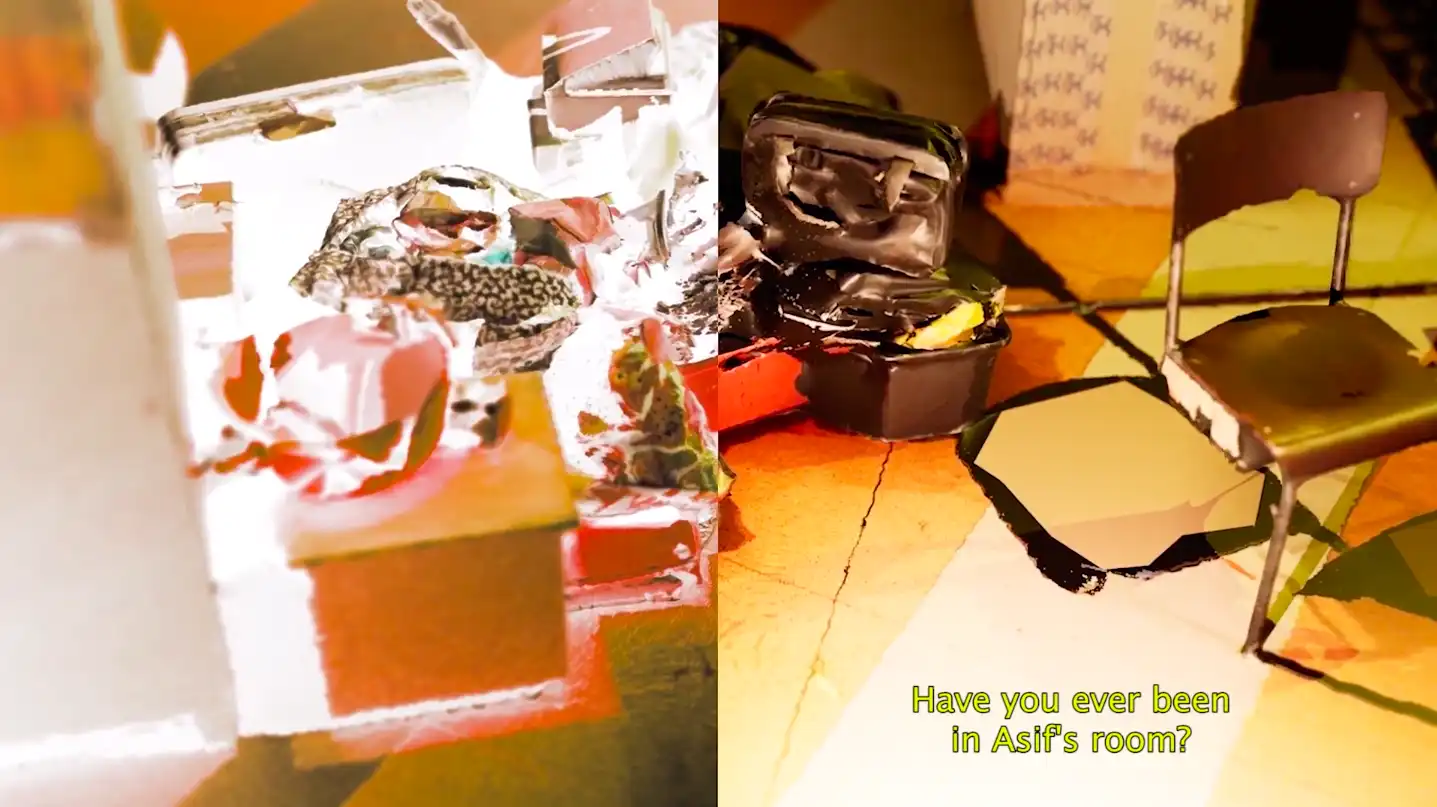 Figure 1 Belonging left behind; the video still shows items left in situ after the departure of residents in an asylum accommodation © PARABOL
Another way to understand the omission of bodies is through the notion of an ocular ethic, which foregrounds moral and political considerations that shape what can or should be seen and how seeing is entangled with power, responsibility, and representation. Monica J. Casper and Lisa Jean Moore (Casper and Moore 2009), in Missing Bodies: The Politics of Visibility, asked why certain bodies are rendered hypervisible in public discourse, whereas others remain unseen or erased. Drawing on examples such as war casualties, undocumented migrants, and people living with HIV/AIDS, they argue that visibility and invisibility are never neutral but are always politically charged, shaped by race, gender, class, and state power. In this context, withholding the body can become a way of resisting visual regimes that commodify, objectify, or discipline refugees’ lives. Instead, Geography of Ghosts invites the viewer to engage in a sense of presence through space, spoken narratives, and atmosphere.
Seeing Ghosts: Complicating In/Visibility
The visual language of 3D LiDAR scans lends itself to the multiple meanings of the titular term “ghosts”. Theories of haunting often use the ghost as a metaphor for how colonial pasts continue to shape the present; that is, how histories of violence remain embedded in institutions, landscapes, and subjectivities, even when repressed or unacknowledged. Jacques Derrida’s (1994) concept of hauntology emphasises the persistent presence of what is no longer present. In Ghostly Matters: Haunting and the Sociological Imagination, Avery Gordon (1997) argues that haunting is a fundamental aspect of contemporary social life, where ghosts represent unresolved social violence. It marks the presence of what has been systematically obscured or repressed, including traces of colonialism, racism, and other forms of structural harm that continue to shape the present. In today’s context of forced migration, these tropes resonate with the systematic neglect of displaced people (Mbembe 2019). Similarly, biomedical practices are haunted; racism within healthcare systems targeting asylum seekers and nonwhite migrants often operates unintentionally, surfacing as a structural form of exclusion and misrecognition (Willey et al. 2022; Kehr 2018).
Geography of Ghosts includes four sequences in which the Syrian public policy expert Nour Barakeh and Austrian migration scholar Helena Segarra reflect on the figure of the ghost in relation to refugee experiences. These sequences diverged from the dominant visual language of the video essay (see Figure 2). They are more abstract and ethereal: the scans dissolve into point clouds and appear to float, distancing themselves from the sharpness and “objectivity” typically associated with LiDAR. This use of our scans allows for an interpretive space for the viewer and invites affective resonance with spoken reflections. Voiced in English, these sequences are the only moments in the film without subtitles, marking a departure from the layered structure used elsewhere.
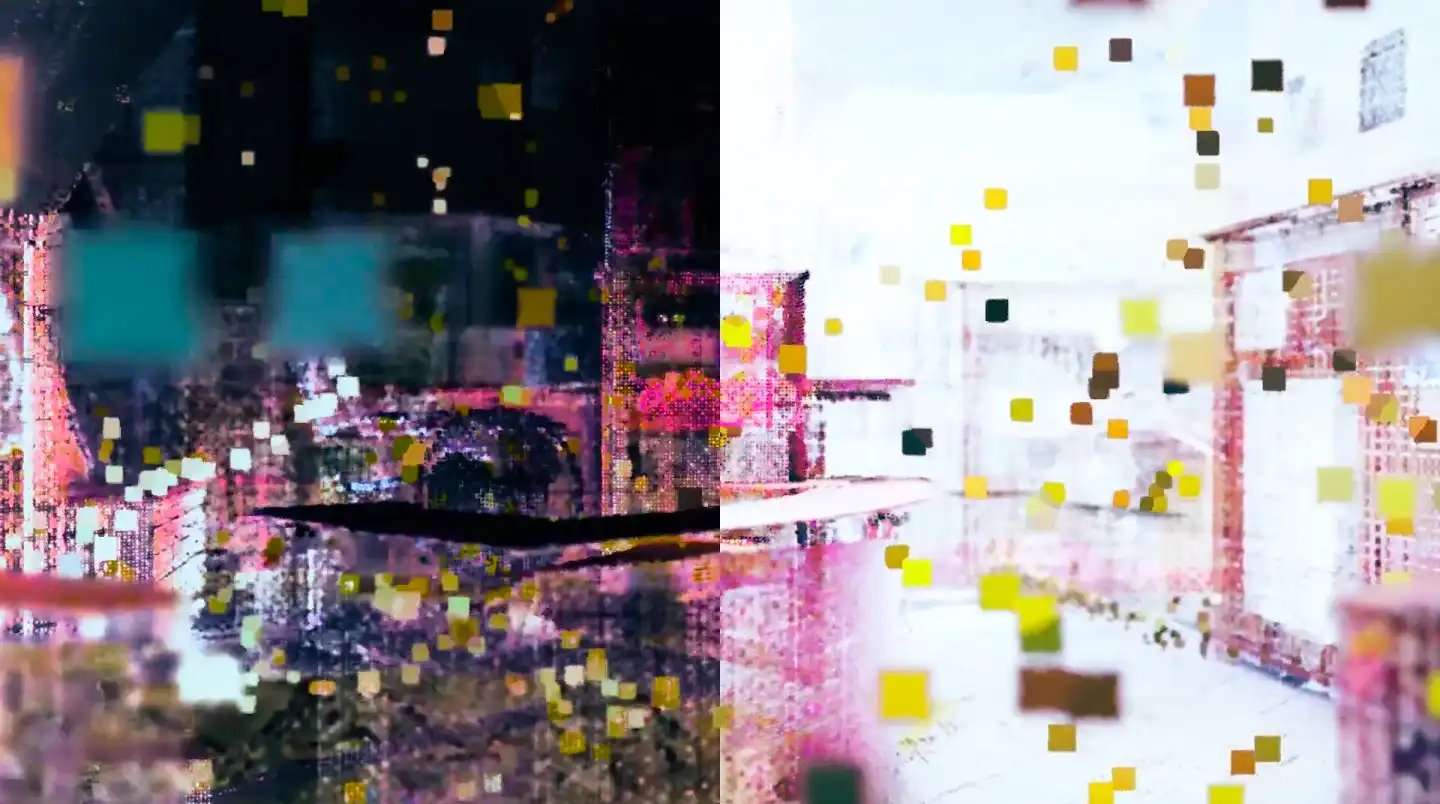 Figure 2 Atmospheric in/visibilities; in the video still, scanned spatial samples dissolve into fine- and coarse-grained point clouds © PARABOL
In one early sequence (minutes 1:15–2:10), Barakeh reflects that it is not the ghost but the djinn who harms, opening a space for rethinking who is constructed as threatening or dangerous in discourses of displacement. In another sequence (minutes 16:35–17:43), Segarra speaks about how visibility can hold two opposing meanings: it may enable recognition and a frequently negated public presence, yet it also entails risk—particularly when refugees are seen only through the lens of legal status, stripped of their full and manifold humanity. This reflection links back to our earlier discussion on withholding visual representations of refugee bodies.
The video essay also maintained a play of visibility and invisibility. In several sequences, the LiDAR scans showed visible gaps where the data was missing. This often occurs when the scanner’s line of sight is blocked by objects such as furniture or because of the technical limitations of the scanning process. While editing software could “correct” these absences, we chose to keep them (see Figure 3). These ruptures serve to create space for something else such as gestures toward the past, future, horrors, hopes, and dreams. Viewers told us that the gaps sometimes felt brutal, similar to echoes of violence or war. Similarly, some interpreted exterior scans as evoking ruins that act as reminders of destruction. There is another kind of haunting: asylum accommodations are often temporary uses of empty buildings set up in former office buildings or hospitals. Traces of these previous uses and the people who once worked or were treated there still linger.
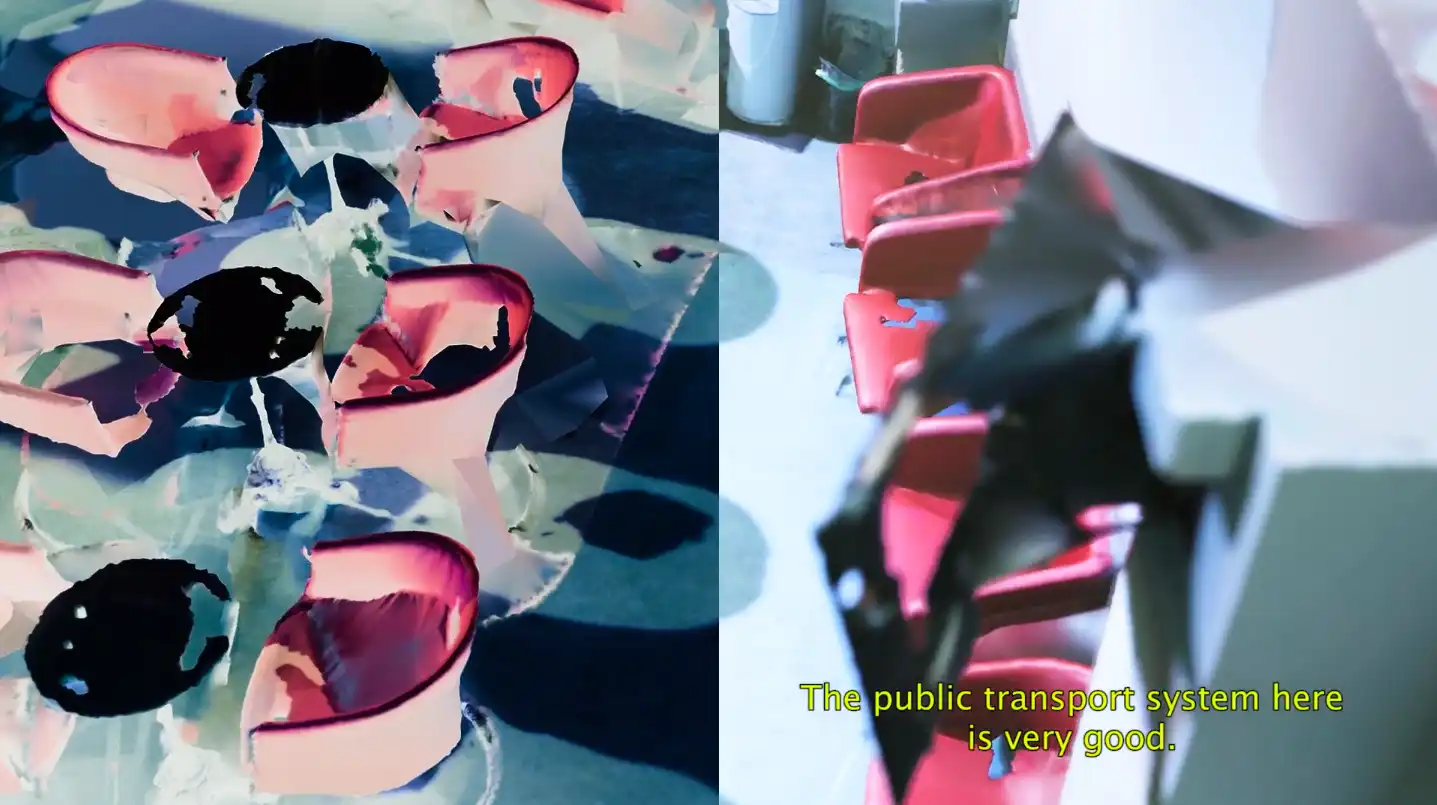 Figure 3 Seating in the waiting room; in the video still, scan data absences are reflected in the incomplete rendering of the chairs and tables in a doctor’s office © PARABOL