‘Sounds of the Uncanny: Connecting with the Otherworld through Sound’ (「常ならざる音―耳を通して異界とつながる」) was an audiovisual documentation project led by myself, researched, filmed, and edited between 2017 and 2019. It was released as part of the Minpaku Visual Ethnography Programme DVD series in 2019 (‘Eerie to the Ear: Connecting with the Otherworld through Sound’, 2019). Audio extracts from the programme and animated onomatopoeia were also incorporated into a sonic immersive installation titled ‘Sounds of the Brink’, presented as part of the Special Exhibition ‘REGNUM IMAGINARIUM: Realm of the Marvelous and Uncanny’, held at the National Museum of Ethnology (Minpaku), Osaka, in the fall of 2019.
This article explains how the project was conceived, researched, filmed, and adapted for different media and contexts—one as an educational film and the other as an exhibition installation. It also discusses visitor responses to the museum installation to assess the effectiveness of this audiovisual experiment.
Key Words uncanny, sonic space, museum exhibition, otherworldly, onomatopoeia
Sounds of the Uncanny: Documenting and Exhibiting the Invisible
(Published March 27, 2026)
Abstract
Introduction
Strange noises of inexplicable origins make our imagination go wild. Our minds instinctively search for rational explanations but often conjure images of goblins, ghouls, and ghosts. Sound stimulates the mind and fuels imagination, playing an important role in rituals where humans attempt to communicate with invisible powers of the otherworld.
One of the aims of this project was to clarify the role of sound in spaces where humans encounter the ‘otherworldly’. Through audiovisual media, I sought to reveal connections among the environment, sound, and human imagination, and to capture an essential aspect of the uncanny.
Of course, it was not realistic to venture deep into the mountains in search of strange noises said to be caused by yōkai, or to stay in a supposedly haunted house until we heard that ‘bump’ in the night. However, creating spooky sound effects or composing eerie music was not what I wanted to do. Our aim was not to produce a ghost film, nor was it our intention to turn the museum exhibition into a haunted-house attraction. The sounds I was searching for were not meant to create atmosphere or realism—they had to be real. In other words, it was essential that the audio sources were not contrived in a studio but were part of culturally authentic practices: sounds that reflect what the renowned Japanese anthropologist KAWADA Junzō called onbunka(音文化), or ‘la culture sonore’ (Kawada 1997).
To capture culturally rooted sounds that evoke communal experiences of the uncanny, I focused on select rituals and festivals in Japan in which the presence of otherworldly beings is sensed aurally. I also included traditional stage sound effects that have long been used in Japanese performing arts to evoke feelings of the uncanny during scenes featuring ghosts, yōkai, or deities. Through video and sound documentation of these events, the project sought to grasp the intangible, immaterial characteristics of communication with the otherworld.
The Uncanny and Auditory Experience
First, a brief summary of our project framework and a note on the concept of ‘the uncanny’ are in order. This exhibition, which included our sound project, revolved around the keywords kyōi 驚異 and kai’i 怪異. The character 驚 (kyō) means ‘to wonder’ or ‘to be surprised’. The second character in both terms, 異 (i), means ‘different’, ‘strange’, or ‘bizarre’, while 怪 (kai) means ‘odd’, ‘eerie’, or ‘suspicious’. This exhibition formed part of a multidisciplinary project comparing kyōi and kai’i as cultural concepts—kyōi referring to marvels of the monotheistic world in Europe and West Asia (mirabilia in Latin and ʿajāʾib in Arabic), and kai’i referring to the uncanny in East Asia—with the aim of identifying similarities and differences between these cultural notions and tracing their transformation throughout the global history of ideas.1)
Kyōi in Japanese means ‘marvels’ or ‘wonders’ and is used in Japanese academic discourse to designate what corresponds to mirabilia in Latin and ʿajāʾib in Arabic within the monotheistic world of Europe and West Asia. However, Kai’i originates from the Chinese word guàiyì, meaning ‘strange’ or ‘uncanny’, and refers to anomalous beings and phenomena regarded as omens of cosmic imbalance or disturbance. Japan, influenced by Chinese language and scholarship, adopted the concept without fully embracing the same worldview (Yamanaka ed. 2019: 2-7).
Thus, kyōi and kai’i not only resonate phonetically, as both words share the same second character 異i (strange), they equally pertain to emotional responses arising from encounters with the unfamiliar. By juxtaposing these analogous concepts, the project created a shared platform for researchers in fields such as natural history, witchcraft, and yōkai studies (which explore strange creatures in Japanese folklore) across diverse yet interconnected cultural spheres in Europe, West Asia, and East Asia. Through this collaboration, we sought to re-evaluate how boundaries—or their absence—between the ‘natural and supernatural’, ‘nature and culture’, ‘rational and irrational’, and ‘real and imaginary’ were perceived across different Eurasian cultures throughout history.
In Japanese, kyōi and kai’i together constitute a valid and appealing comparative analytical framework. Such a framework, expressed in a non-Western language, can offer a multifaceted perspective on the history of ideas predominantly shaped in the West and may reveal interconnections between contrasting cultural phenomena that have previously remained unnoticed due to linguistic or epistemological barriers.
However, to open our discussions to an international audience, and since knowledge production is currently dominated globally by the use of English, I needed to provide English equivalents for these terms. Kyōi I translated as ‘the marvellous’ (also as ‘marvels’ or ‘wonders’) and kai’i as ‘the uncanny’. The choice of ‘marvels’ or ‘wonders’ for kyōi was rather self-evident and uncontested, since kyōi is the widely accepted translation for the Western concept of ‘wonders’ or ‘marvels’. Using the term ‘uncanny’ for kai’i, however, presented complications—first because kai’i/guàiyì carries connotations culturally specific to Japan or China that are difficult to convey in a single English word, and second because the English term ‘uncanny’ itself carries semantic baggage. I must first unpack the layers of meaning attached to ‘the uncanny’ and explain why I consider it the most suitable counterpart to ‘the marvellous’.
Here, I do not wish to delve deeply into etymology or linger on theoretical elaborations of this concept across disciplines such as literature, fine arts, architecture, and robotics (Vidler 1992; Royle 2003; Bronstein and Seulin 2019; Haensch et al. 2019). What is important to note is that ‘the uncanny’ has been applied to both the German concept of das Unheimlich, as discussed by Sigmund Freud in his well-known 1919 essay (Freud 1919; Freud 2003), and l’étrange, as described by Tzvetan Todorov in Introduction à la littérature fantastique as a subgenre of the fantastic (Todorov 1970; 1973). Freud’s unheimlich and Todorov’s étrange have both been translated as ‘uncanny’, yet they convey different meanings. As Todorov notes in his reference to Freud’s Das Unheimlich (translated as le sentiment de l’étrange in his text), ‘there is not an entire coincidence between Freud’s use of the term and our own’ (Todorov 1973: 47).
Todorov’s main focus is on the literary genre of the fantastic which he describes as ‘that hesitation experienced by a person who knows only the laws of nature, confronting an apparently supernatural event’. (Todorov 1973: 25). According to Todorov, when the apparently supernatural phenomenon is susceptible to a rational explanation, it falls into the category of the uncanny (l’étrange), and when the event truly seems to transgress the laws of nature, it becomes the marvellous (le merveilleux). Thus, the fantastic is seemingly ‘located on the frontier of two genres, the marvellous and the uncanny’ (Todorov 1973: 41), suspended in the state of hesitation between the two.
In Todorov’s framework, the marvellous and the uncanny are confined to the realm of fiction, reflecting a markedly modern Western distinction between the ‘natural’ and the ‘supernatural’. However, our project does not focus on fiction in the modern sense but on what people genuinely believed to exist in material reality. As Foster observes in his study on yōkai (Foster 2009: 19), and as our previous research also confirms (Yamanaka and Yamada eds. 2019), in the premodern worldview, marvellous and uncanny beings or phenomena may have been viewed as anomalies, yet their existence and experiences were not dismissed as mere fantasies.
In this sense, kai’i is perhaps closer to Freud’s das Unheimlich than to Todorov’s l’étrange. Although Freud devotes much of his attention to uncanny elements in imaginative literature, he recognises that the uncanny in fiction and in real life should be considered separately, and thus does not deny that it can manifest in material reality. Setting aside his psychoanalytic interpretation that attributes the cause of the uncanny effect to repressed childhood complexes (which constitutes much of part II of Freud’s essay), the careful analysis of the ‘specific affective nucleus’ of the German word unheimlich in part I is highly insightful for our examination of kai’i. Freud defines unheimlich as a “particular species of the frightening” that “belongs to two sets of ideas, […] the one relating to what is familiar and comfortable [the ‘homely’ meaning of heimlich], the other to what is concealed and kept hidden [as in Geheim, ‘secret’].” Quoting Schelling’s Philosophie der Mythologie, Freud observes that “the term ‘uncanny’ (unheimlich) applies to everything that was intended to remain secret, hidden away, and has come into the open.” (Freud 2003: ‘The Uncanny’, I, para. 12).
If we understand the uncanny (unheimlich) as the fear arising from an anomalous event in which something familiar yet hidden becomes manifest as an unfamiliar phenomenon, this interpretation aligns closely with the essence of kai’i. Against this background, I have chosen to translate kai’i as ‘uncanny’ rather than as ‘strange’, ‘paranormal’, or ‘supernormal’.
Western research on the uncanny in relation to auditory experience has primarily focused on the Gothic genre (Donnelly and Mollaghan 2023; Guhr and Algee-Hewitt 2023; Hand 2018; Van Elferen 2012). In Japanese folklore studies, Tsunemitsu’s article on the auditory experience of the uncanny is crucial because it analyses patterns of interaction between humans and the otherworldly through sound—how otherworldly presences are perceived through the ear and how humans communicate with them, either repelling or inviting them, through noises or conjurations (Tsunemitsu 2017). Yasui’s significant study on spirituality and the body identifies the ear as “the part of the body that quickly detects events related to the boundary between this world and the other world." (Yasui 2014: 214). We have also held stimulating discussions on sound in our joint research project and dedicated a section titled ‘Sounds: Hearing the Otherworld’ 「音―聞こえてくる異界」 in our collective volume, which includes five contributions (Inaga 2019; Inoue 2019; Komiya 2019; Oomichi 2019; Sasaki 2019).
Otherworldly Presence through Sound
How to present the ideas we discussed in an academic setting to a general audience, and include them as a sensory experience within a museum exhibition, was a challenging question. Uncanny beings and phenomena are often described as ‘strange sounds’ that are invisible and intangible. For example in Japanese folklore, uncanny phenomena such as tengu-daoshi (toppled by a tengu), furusoma (old woodcutter), or azuki-arai (red bean washer) are initially captured as mysterious and incomprehensible sounds encountered in the mountains (sounds of trees falling or beans being washed in the river of which the origin cannot be identified). These sounds appear in oral narratives through onomatopoeias like ‘pakān’ and ‘shaki shaki’, but later, when the stories were recorded and illustrated, they assumed specific monstrous forms and came to be identified as types of yōkai [Figure 1]. Visitors might recognise the popular visual image of azuki-arai from the manga adaptation by MIZUKI Shigeru (the renowned author of Gegege no Kitarō), yet may not realise that in the original tale, it was a sound without physical form. I wanted visitors to experience this auditory eeriness of the uncanny. However, it was unrealistic to venture into the mountains to capture noises resembling azuki-arai, and I was reluctant to artificially create sound effects that might lack authenticity.
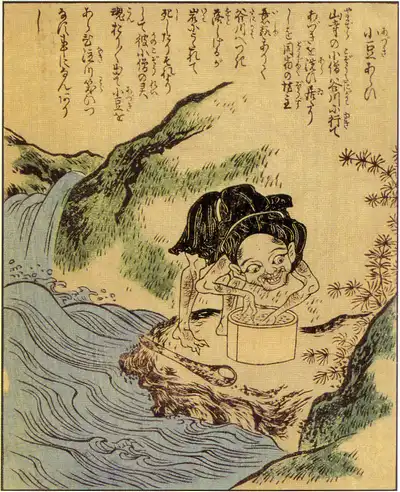 Figure 1 Azuki-arai (小豆洗) — a yōkai said to make the sound of azuki beans being washed — from Ehon Hyaku Monogatari (絵本百物語) Public domain.
I thank my colleague SASAHARA Ryoji, a specialist in Japanese folklore studies, for helping me address this problem. He suggested filming and recording certain festivals in Japan where sound plays an essential role in signalling otherworldly presence. Following Sasahara’s advice, and with information provided by our research project member, SASAKI Satoshi, we selected five filming locations, which can be categorised as follows:
- 1)
- Otherworldly powers influencing objects in this world to produce sounds interpreted as omens → Narukama oracle at Kibitsu Shrine, Okayama.
- 2)
- Sounds produced by humans to announce the appearance of transcendental beings → Kasuga Wakamiya Festival at Kasuga Shrine, Nara, and the Niino Snow Festival, Nagano.
- 3)
- Strange sounds accompanied by strange images (masks and costumes) → Takahashi Jūhachido Dance (Yokkabui Festival), Minamisatsuma, Kagoshima
- 4)
- Otherworldly sounds in traditional performing arts → Rakugo (comic storytelling)
I also wanted to include a sample of an uncanny animal call that was attributed to a yōkai or other monsters in folklore, for instance, the song of the toratsugumi (Zoothera aurea), said to have inspired the legend of the chimera nue, or the haunting calls of whales that may have given rise to ‘siren song’ myths. This idea did not materialise in the 2019 Special Exhibition owing to time and budget constraints, but, as I explain later, such an example was added to the touring exhibition at the Ainu National Museum. I will now briefly describe the sounds we recorded.
The Narukama oracle (Narukama shinji 鳴釜神事) is a Shinto divination ritual practised at Kibitsu Shrine(吉備津神社) in Okayama. Narukama, or Kamanari, literally meaning ‘sounding cauldron’, was originally a phenomenon recorded in ancient China, where a cauldron would emit a strange noise unexpectedly. The sound was interpreted as an omen, and the divination of sounding cauldrons had developed by the Han dynasty. This belief was introduced to Japan sometime before the 8th century, where the interpretation of unexpected cauldron sounds was carried out by onmyōji, the divination officials of the imperial court (Sasaki 2017; 2019).
The Narukama oracle at Kibitsu Shrine, still practised today, can be traced back at least to the end of the Muromachi period (latter half of the 16th century), with the earliest record dating from 1568. This oracle represents a distinctive form of ‘sounding cauldron’ divination because the shrine provides a setting where augury seekers can actively initiate the ritual rather than passively interpret a randomly resonating cauldron. The oracle at Kibitsu Shrine is also notable for the local legend associated with it. According to tradition,2) the shrine’s namesake, Prince Kibitsuhiko (吉備津彦命), son of Emperor Kōrei, was sent by the imperial court to subdue rebellious forces in the region. After the prince defeated the defiant Ura (温羅) and his clan, who were feared as oni (demons), he decapitated the chieftain. The severed head, however, continued growling even after it was fed to the dogs, transformed into a skull, and buried deep underground.
The tormented Prince Kibitsuhiko saw Ura in a dream one night. Ura told the prince:
"Let my wife, Princess Aso, a priestess of the shrine in Aso, cook food at your Okamaden Hall. If something should happen to this world, please gather in front of the cooking stove. When fortune comes, a cauldron on the stove will sound beautiful. When misfortune comes, it will sound furious. You appear as a kami of miraculous power after leaving this world. I will be your first messenger to reward and punish people.” (Kibitsujinja 2021)
Prince Kibitsuhiko followed the instructions, and the growling ceased. A shrine was later founded with Kibitsuhiko enshrined as the main deity. In its Okamaden (the cooking hall), an elderly woman from the borough of Aso was brought to serve as the oracle priestess of the sounding cauldron.
So, how does the oracle work? At Kibitsujinja Shrine today, anyone can request that the ritual be conducted. We visited the shrine on a mid-December morning in 2017. At the reception office (shamusho), visitors must first state the specific fortune they are seeking (for example, regarding health and well-being, exam results, projects, or romantic endeavours) and donate an amount of at least 3000 yen per wish. The augury seeker then attends a ceremony in the Prayer Hall (gokitōsho), where the priest recites a Shinto liturgy and presents a kamifuda—a talisman onto which the specific wish is inscribed. Holding the kamifuda, the seeker follows the priest to the Okamaden, passing the magnificent Main Sanctuary (honden) and walking down the picturesque roofed corridor (kairō).
In the Okamaden, the priestess, called Azome 阿曽女 (‘woman of Aso’), awaits, preparing the wood-burning stove with a steamer on top. She explains that the sound of the cauldron is the voice of Ura, whose head lies buried deep beneath the stove. The sound reveals ‘good fortune if it rings, bad fortune if it does not ring’ (nareba kichi, naraneba kyou).
The augury seeker sits behind the priest while the Azome adjusts the fire. The atmosphere is solemn, filled with the crackling of the fire and the chirping of birds outside. Golden particles of ash drift through the swirls of smoke, illuminated by shafts of sunlight entering through the wooden grilled windows, as if charged with expectation for the prophecy to come. The Azome, now seated at the high position above the stove, waits as the priest begins reciting the Shinto liturgy, announcing the seeker’s name and wish. She then places some brown rice into a small square wooden container and begins to shake it rhythmically. The soft, repetitive shaka shaka continues for a while until, suddenly, a thunderous VWOOOOONG reverberates through the hall as the priestess shakes the rice container inside the steamer. The roar is unmistakably uncanny, unlike any sound one has ever heard, yet simultaneously uplifting and powerful. The sound stops immediately when the Azome places the mat over the steamer once again.
The sound, or its absence, is the oracle’s answer, and neither the priest nor the priestess offers any interpretation after the ritual. The sound’s quality or duration may vary, even in rituals conducted at the same time of day under identical climatic conditions. I actually made two separate requests (in case the first recording failed). The second time, the sound was more of a gentle hum than a boom, yet the cooker continued droning on its own for quite a while, even after the priestess removed the rice box and replaced the cover. It was up to me, the augury seeker, to interpret the difference in sound. Since my first wish concerned professional success and the second related to personal matters, I understood the first loud roar as a sign of a one-time, significant success in our project (the special exhibition), and the subsequent low but enduring whirr as an omen of modest, lasting happiness for my family.
In the interview afterwards, the Azome told us there had been occasions when three people attended the same session, but the sound was audible only to two participants and not to the third. The priestess reassured us that the absence of sound was merely a warning and that those who took active steps to change their fate ultimately turned their fortunes for the better. She cited, for example, a woman who, after receiving the silent omen, underwent a hospital check-up and was cured of an illness at an early stage, and a high school dance group took the silence as a warning about their performance, changed their choreography and music, and eventually won the competition.
For the second category—uncanny sounds produced by humans to announce the appearance of a transcendental being—we documented the relocation ceremony (senkō no gi 遷幸の儀) of the Kasuga Wakamiya On-matsuri (春日若宮おん祭) in Nara. The Kasuga Wakamiya On-matsuri is an annual winter festival that prays for a good harvest and peace, dating back nearly 900 years to the Heian period. For two days in mid-December, the deity Ameno Oshikumone 天押雲根命also known as Wakamiya-sama, is ceremonially relocated from its usual abode—the Wakamiya Shrine, located south of the Main Sanctuary of Kasuga Shrine—to the o-tabisho 御旅所, literally ‘place of travel’. The o-tabisho is a sacred site constructed on a field near the first torii gate, along the main approach to the Kasuga Shrine complex, serving as the deity’s temporary abode during the festival, where it is honoured with performances of music, dance, and athletics.
The relocation ceremony takes place at midnight on December 17. It is the procession that carries the deity to its temporary seat—from the Wakamiya Shrine, through the second torii, and down the main approach. This ceremony is the most mystical part of the festival, performed in complete darkness to keep the deity concealed from human view. All streetlights, building lights, and even vending machines in the vicinity are turned off. Spectators are strictly forbidden to use their cellphones, torches, or any other device that may be a light source. One is also not allowed to film this procession, and our crew was no exception. However, the visual element is secondary to the auditory experience of this ceremony, and we obtained permission to record the otherworldly sounds of the sacred march.
Unable to see or move, one waits motionless in the freezing darkness along the shrine’s main pathway until, from the direction of the second torii gate, a faint rumble of voices begins to rise. As the footsteps on the gravel draw closer, the rumble swells into an awe-inspiring polyphony of officiants chanting ‘UOOOOOOOH’ to herald the deity’s passage through their vocal misaki 警蹕. Layers of sound form a sonic field around a presence so powerful yet vulnerable that it can neither be touched nor seen.
The procession is led by two torchbearers, but the torches are held downward and dragged along the ground, leaving two dimly glowing trails of sparks. The cluster of officiants carrying the deity forms an indistinct shadow mass gliding behind these faint landing lights, yet one can unmistakably sense a strong presence nested at the core of this flowing mesh of deep voices. An ensemble of gagaku musicians follows, their high-pitched wind instruments leaving a contrasting afterglow, like the contrail of newborn stars drawn toward a black hole.
As with the Narukama oracle, in the Senkō no gi, the otherworldly presence is perceived only through hearing. It is the reverberating shield of human voices that defines the deity’s passage. In our third example, the Niino Snow Festival (Niino no yuki matsuri 新野の雪まつり), held annually in mid-January at the Izu Shrine 伊豆神社in the Niino valley of southern Nagano Prefecture, employs sound to momentarily dissolve the barrier between the human and spirit worlds. Since the folklorist ORIKUCHI Shinobu introduced this festival to the wider public around 1930, it has become known for its visually captivating—and stamina-demanding—performances of masked dances and comic sketches by Niino villagers (Ogawa 2010). Over the years, it has been featured in numerous documentary films (Noda 1980; Abe 1981; Sakurai 2017). We visited in 2018 to observe and film the continuous sequence of rites and performances that unfold from nightfall on January 14 until the following morning. However, the part most relevant to our sound project was the ranjō 乱声, literally ‘riotous voices’, which takes place around midnight after a series of preparatory ceremonies, including Shinto music and dance in the kagura pavilion, the raising of the giant torch, and purification and offering rites in the main sanctuary.
Ranjō marks the beginning of the main event of the evening—the Courtyard Ceremony (Niwa no gi 庭の儀)—and serves as a rallying cry inviting gods and spirits to join the festivities. The chief priest of the Izu Shrine later explained in an interview that this enactment symbolically represents the myth of Amano-Iwato, the ‘heaven’s rock cave’, where the sun goddess Amaterasu withdrew in anger, depriving the world of light. To coax her out, the gods held a raucous celebration outside. Members of the volunteer fire brigade (who also erect the giant torch) line up beside the wall of the chōya庁屋, a shed in a corner of the shrine courtyard where the sacred masks are temporarily stored. They strike the side of the shed with logs while repeatedly shouting ‘ranjō! ranjō!’ As the ranjō resounds, the torch tower is lit by the priest, who pulls the ropes of a cable system that carries a flame affixed to a small wooden boat that appears to glide upward to the top of the 5-m-tall torch.
When the uproar of the ranjō subsides, accompanied by joyous jingling of bells, Saihō 幸法 bursts from the chōya—the first and highest deity to appear in this festival. The god of bounty holds a pine branch in one hand and a long-handled square fan in the other, wearing a pointed straw bonnet with a small bundle of five grains attached to its tip. He bobs and sways through the courtyard crowd, turning, squatting, jumping, and stretching. The red mask, with slightly drooping eyes and mouth outlined in simple black, lends the god a rustic warmth and charm; one can almost hear the steam rising from the crimson headwrap.
The fellow villagers not only watch but encircle Saihō in a close ring, cheering and teasing him each time he strikes a pose. The barrier between god and human momentarily lifts. The mingling continues in the shrine courtyard through the night as other incarnations of gods and spirits appear to perform. There is no hierarchy—the gods do not stand on a higher stage or podium. For one night each year, they mingle with villagers on equal ground, within the same sacred boundary of the sacred grounds. Under the watchful eyes of the die-hard handful of participants and spectators that remain beyond daybreak, the festival closes with a quiet prayer for a good harvest.
The fourth example we documented, in the summer of 2017, was a festival in Kyushu where otherworldly beings themselves emit uncanny sounds. These eerie tones heighten the visual strangeness of garappa during the Takahashi Jūhachido Dance (高橋十八度踊り, also called the Yokkabui Festival), held in Konpō-chō, now part of Minamisatsuma City, Kagoshima Prefecture.
Kang kang kang kong, kang kong kong…, kankoko kankoko, kang kong kong. A piercing rhythmic clang of alarm bells rung by the elders reverberates through the village, alerting the villagers to the coming of garappa. Children cling to adults, and some already begin to sob. Then, a band of faceless wild men in rags comes hurtling through the streets, yelling hyoooooh, hyoooooh, chasing the little ones and trying to whisk them away in sacks. A little boy, desperately struggling to escape the grasp of one of the monsters, cries out, ‘I will never disobey, I swear! I will be a good boy!’
Garappa are said to be the local equivalent of the water spirit kappa. But the garappa of the Yokkabui do not at all resemble how kappa are usually conceived, as a kind of humanoid turtle with webbed hands and feet and a watery ‘dish’ on its head. The garappa here are clad in dark old night kimonos, hence the name yokka bui (< yagi kaburi 夜着被り, ‘night robe wearers’). Their heads are completely covered by conical hoods made from the fibrous bark of the shuro palm, a featureless, brown mask that turns the village youth into hairy, faceless, unidentifiable bogeymen. Even in broad daylight, when the festival takes place, they are indeed eerie, yet they are incarnations of water gods who bring good harvest and protection from water-related disasters and accidents.
Similar to the Krampus of the Alpine regions in Central and Eastern Europe, garappa go through the village scaring children and trying to carry them off in sacks. The elders recalled the olden days when they would even barge into people’s houses, but nowadays garappa are only allowed to wreak havoc in the open streets and within the ‘controlled environment’ of the village nursery school.
After the pandemonium in the nursery grounds, the whole crowd moves uphill to the Tamade Shrine, where a sumo ring is constructed for the day. A sumo tournament follows between the ō-garappa (big garappa) and the ko-garappa (little garappa), who are preschool boys with mawashi belts tied around their slender waists like real sumo rikishi. The little boys face the robust creatures bravely and overthrows them match after match. In the end, everyone dances joyfully around the ring to 18 rounds of sumō jinku (celebratory or humorous songs sung at special sumo events).
Finally, in addition to these folk practices of communicating with or expressing otherworldly things through sound, I wanted to include audio sources recognisable to a wider Japanese audience as being typically uncanny. For this, we recorded sound effects that have been stylised in traditional Japanese performing arts to set the scene for the uncanny.
In kabuki, which developed into a highly stylised form of theatre during the Edo period, sound effects made by flute and percussion, called narimono, are part of the geza ongaku or stage-side music that sets the tone for particular scenes. In the genre of kaidan-mono—uncanny stories often performed in summer—a technique called ‘dorodoro’, a tense pulsation of the ōdaiko (large drum) that builds suspense, together with another technique called ‘netori’, a slowly mounting, wailing tone of the fue (transverse bamboo flute) that sends chilling vibrations, form a set of sounds that prepare the audience for the imminent appearance of phantoms or yōkai. These sound effects are also used in other forms of traditional theatrical performance, such as ningyō jōruri (puppet theatre) and rakugo (comic storytelling), and have been popularised in modern Japanese culture. Thus, when the flute sounds hyuuuuu and the drum beats dorodorodoro, most Japanese instinctively ‘brace for impact’.
We were able to film a version of hyūdorodoro with the cooperation of professional rakugo-ka (comic storyteller), Mr KATSURA Kujaku 桂九雀 and his accompanying musicians (hayashikata 囃子方), who performed a rakugo adaptation of the classic ghost tale Sarayashiki (Manor of the Dishes 皿屋敷). In the story, the ghost Okiku, a servant girl unjustly killed for breaking one of ten heirloom dishes, haunts her master’s household by woefully counting up to nine every night by the well, lamenting the missing plate for which she was blamed. Although the rakugo telling is a parody, the tension-building sound effect is basically the same as in kabuki. As the narrative approaches its climax, when the ghost is about to appear, the stage-side hayashikata cue in their hyuuuu dorodorodoro. Yet instead of a hair-raising fright, the audience receives a comic punch line, and the suspense dissolves in laughter.
The Installation: Onomatopoeia
The footage from the documentation project was edited into a 33-minute programme entitled Eerie to the Ear: Connecting with the Otherworld through Sound (「常ならざる音―耳を通して異界とつながる」), and released as part of the Minpaku Visual Ethnography programme DVD (Yamanaka dir. 2019a)4). This video is available for viewing in the National Museum of Ethnology’s videotheque (programme no. 7247), and the DVD (no. 36 in the series) can be leased for non-commercial educational use.
In the Special Exhibition REGNUM IMAGINARIUM: Realm of the Marvelous and Uncanny (Aug 29–Nov 26 2019), which I curated at the National Museum of Ethnology, I wanted to utilize this material in a way that the attention of the visitors focuses more on the auditory than the visual. A section of the exhibition was therefore reserved for a sonic immersive installation titled ‘Sounds of the Brink’.
This was the first room visitors entered on the second floor of the Special Exhibition Hall, marking the beginning of Part II (Room E in the layout), after leaving behind the visually dense Part I, where diverse representations of marvellous and uncanny creatures from around the world were displayed.
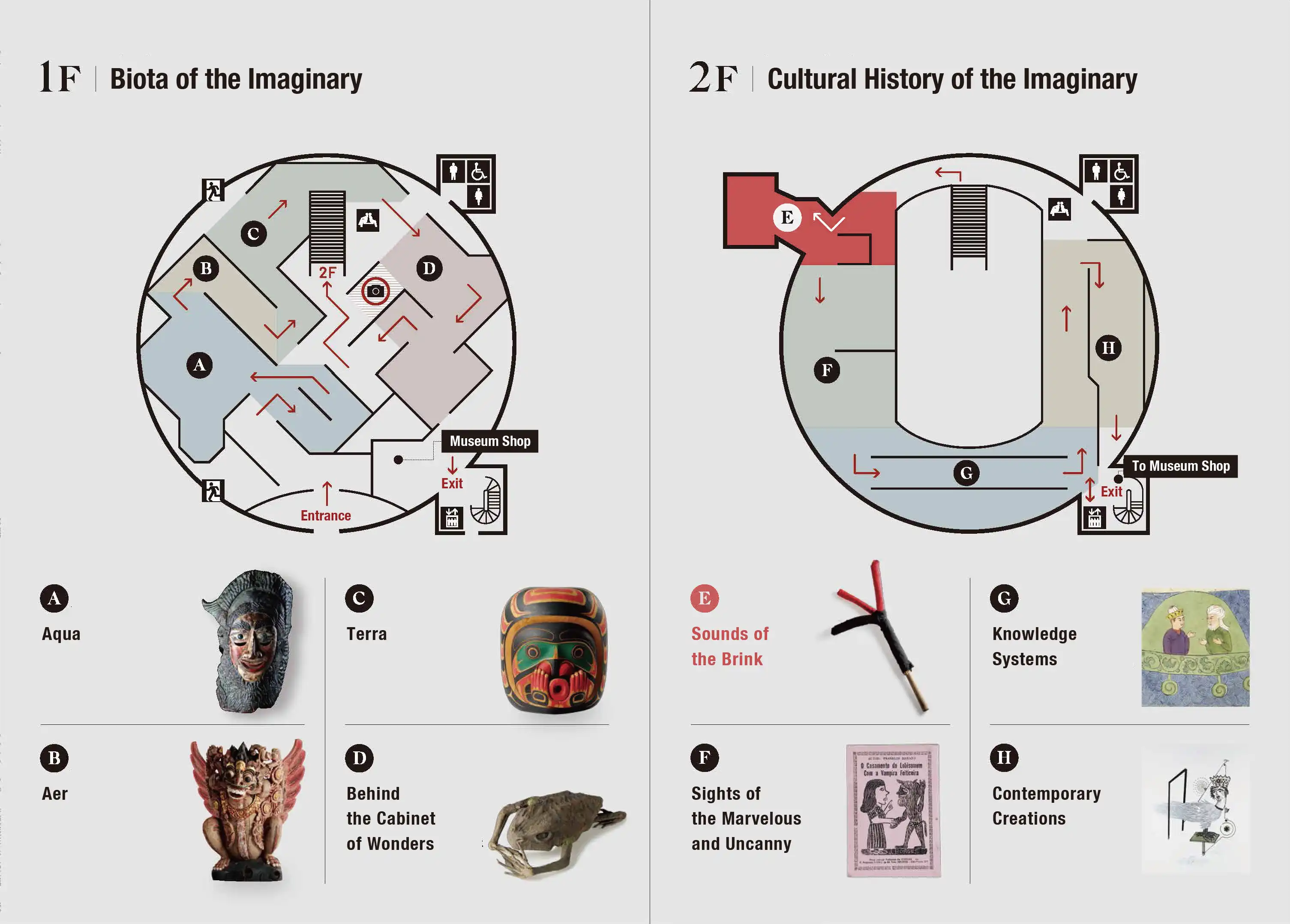 Figure 2 Layout of the Special Exhibition REGNUM IMAGINARIUM: Realm of the Marvelous and Uncanny
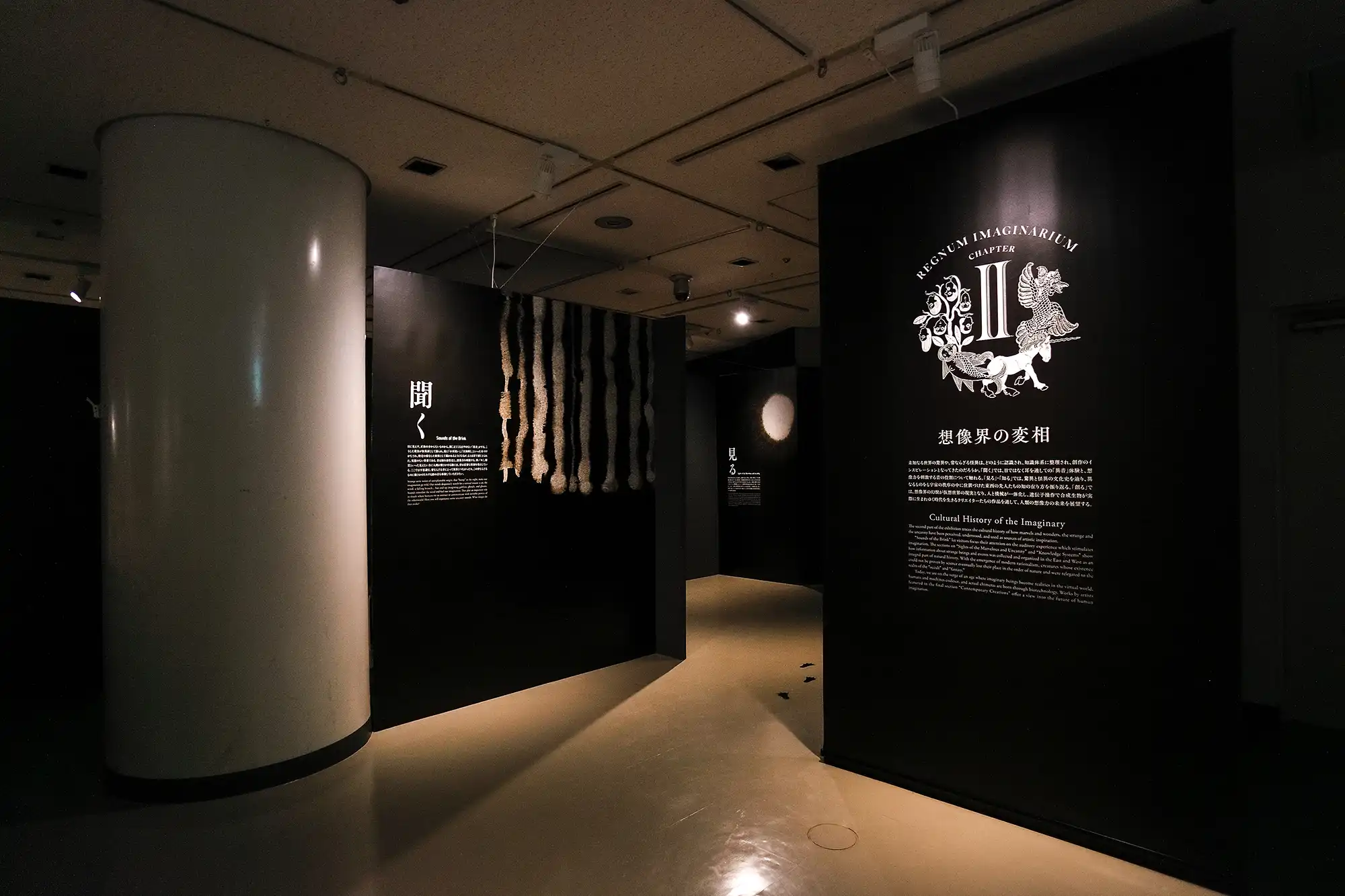 Figure 3 ‘Sounds of the Brink’ section. Photo by DAIDO Yukiyo
Lured by mysterious sounds, visitors entered the dark, curtained room, where they perceived a seemingly holographic dance of white phonograms—animated onomatopoeia fluctuating in sync with the eerie noises—about which they had been given no explanation beforehand. Without any visual information identifying the source of the sound, the audience stood transfixed by the swaying layers of 'vwooong', 'hyooooh', 'ranjooo', and so forth that emerged from the depths of the room.
The immersive experience was achieved with surprisingly simple equipment and setup. Espa Corporation, the filmmaking company that handled all the camera work and editing for this project, created a two-dimensional animation of the onomatopoeia representing the recorded sounds5). Using white letters on a black background, they moved the characters expressively to match the corresponding tones.
We projected this animation using two projectors (Panasonic TH-D5600; Panasonic PT-VW545NJ) positioned at different angles onto multiple layers of semi-transparent fine-mesh screens that hung at varying angles. The white letters filtered through the mesh, repeating at different depths and angles to produce a three-dimensional effect. Mr WAKABAYASHI Hiroyuki, an architect from Kyoto who designed the entire Special Exhibition, supervised the on-site adjustment of the projection and screens to achieve the intended effect.
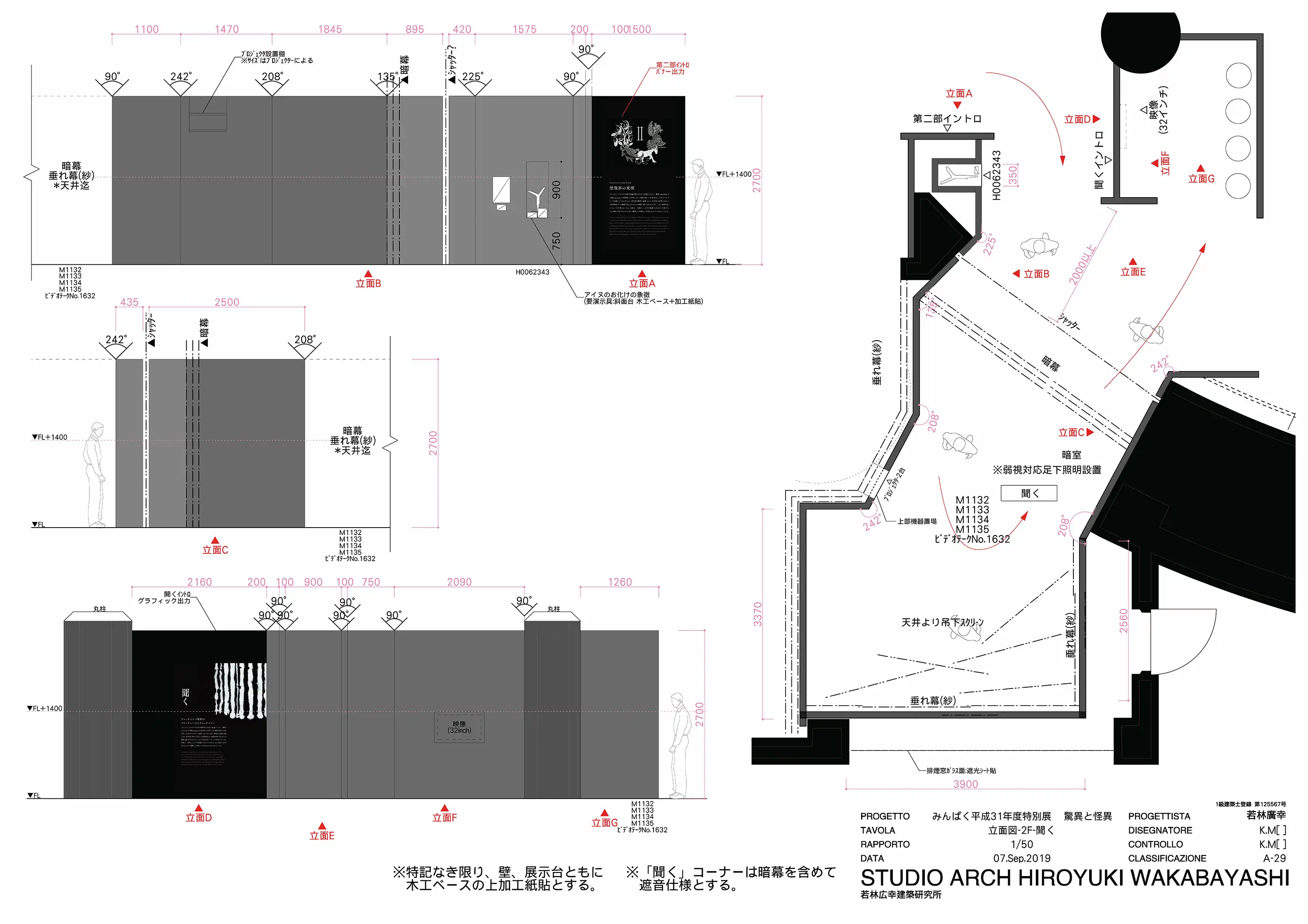 Figure 4 Working diagram for the ‘Sounds of the Brink’ section. Exhibition design by WAKABAYASHI Hiroyuki
The immersive experience was further enhanced by the sound design created by Mr TSUJI Kunihiro, who carefully configured the audio system (speakers: YAMAHA NS-P620; amplifier: YAMAHA RX-A1020) to produce a stereophonic sound field. The placement of the subwoofer was particularly crucial in reproducing the low roar. (Note: the low resonance of the Narukama oracle may not be audible to readers of this article without an adequate speaker.)
Outside the ‘Sounds of the Brink’ room, we set up a viewing corner where visitors could watch a digest version of the documentary film on a monitor, explaining the context of the sounds. Only then was the mystery of the sound sources revealed.
*This film aims to provide a visual representation of the context of each film in the following order: Films 2, 5, 1, 4 and 3. The narration is in Japanese, as in the exhibition. Please refer to the main text for details of each narrative.
Visitor Reactions
We were pleasantly surprised that many visitors found this experimental part of the exhibition the most innovative and impressive. Our then Director-General, Prof YOSHIDA Kenji, remarked after experiencing the room, ‘It’s even better than teamLab!’6) A text-mining analysis of the visitor surveys collected during the exhibition showed that the ‘Sounds’ installation ranked as the third most popular section when respondents were asked, ‘Which section or exhibit engaged you the most? Why?’
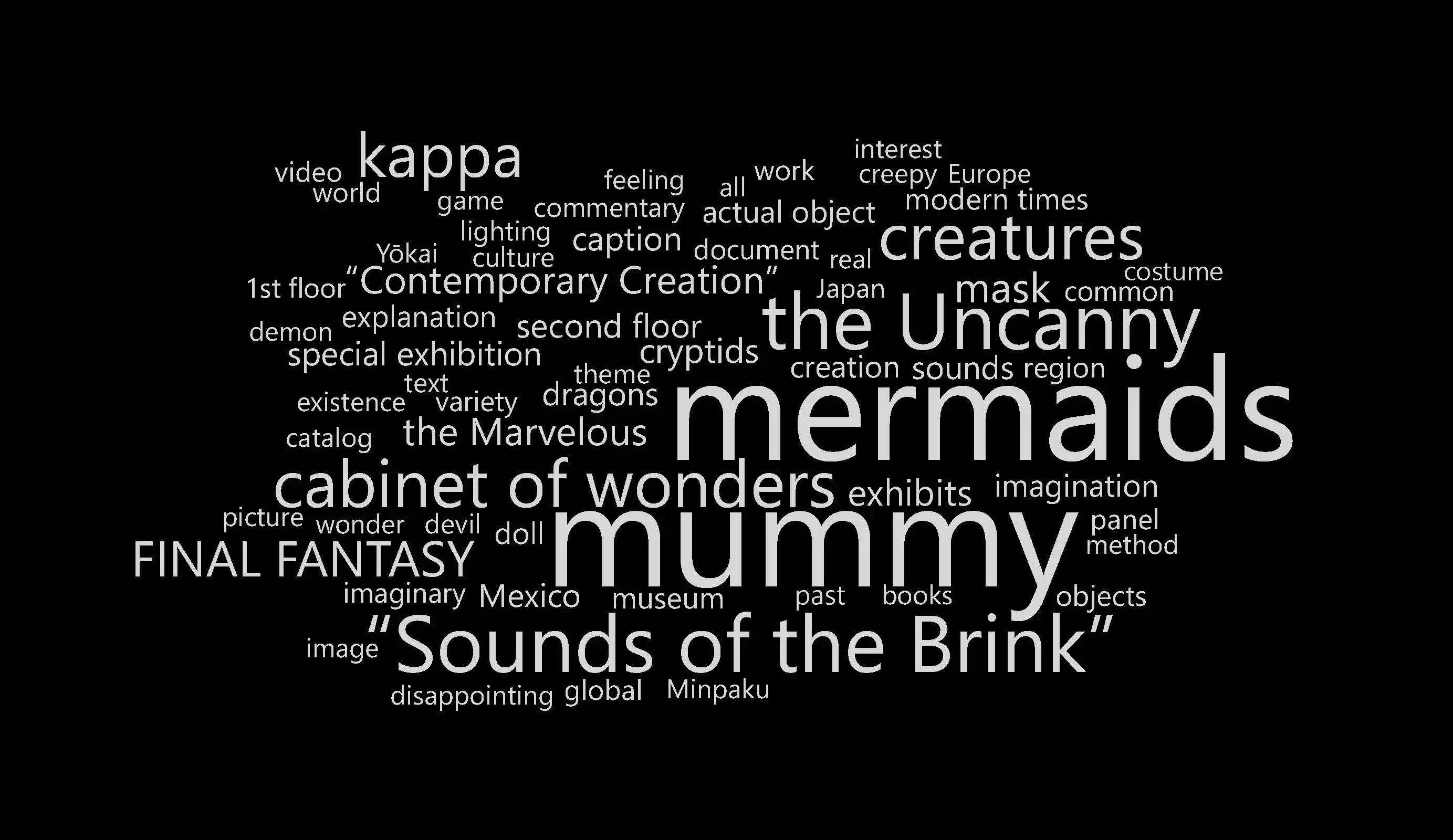
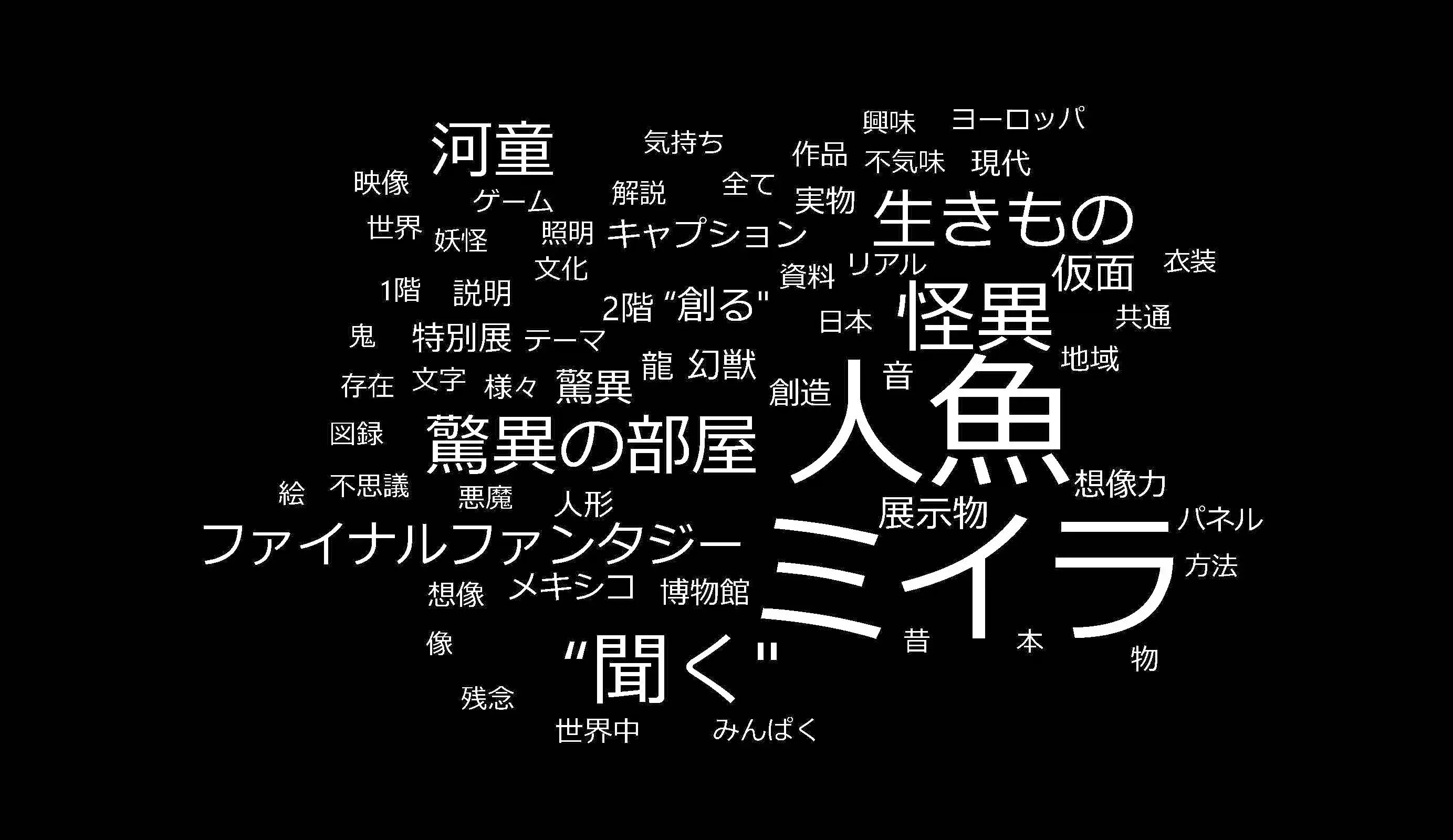 Figure 5 Text-mining analysis of the visitor surveys collected during the REGNUM IMAGINARIUM Special Exhibition (Japanese original and English translation)
Here are a few samples of visitor comments about the installation, translated into English: “It felt like the marvellous and uncanny that I had been looking at, all of a sudden came into me” (age group 20s); “Very innovative way to appeal to the senses” (age group 20s); “I usually tend to read captions first in exhibitions, so the sensory approach was refreshingly different” (age group 20s); “I would not have thought that just having sound and letters can be so scary” (age group 30~50); “The sounds made me feel like I have entered another world” (age group 30-50).
Visitors also posted their impressions on social media after visiting the museum. To give a sense of the response, here are a few phrases translated into English, along with screenshots from tweets:
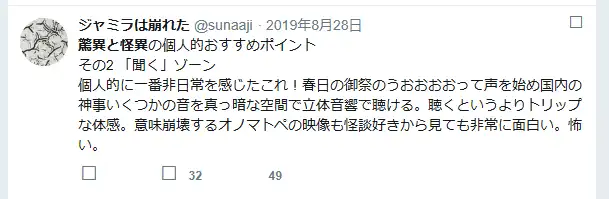 Figure 6 “You get a feeling that’s more like tripping than listening.” (Jamira wa kuzureta, @sunaaji, Aug. 28, 2019)
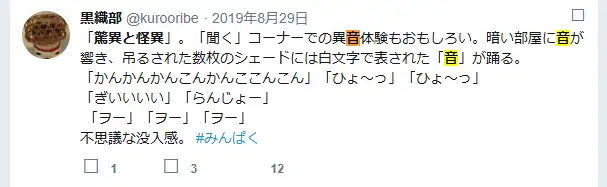 Figure 7 “A very strange immersive feeling” (Kurooribe, @kurooribe, Aug. 29, 2019)
 Figure 8 “…a young man, seemingly caught in a trance, was communing in rap with the sounds. He could have been a shaman in a different world.” (Mushi pasomaso, @BCEMILj0ufsoHZ9, Sept. 9, 2019)
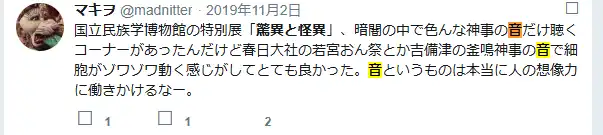 Figure 9 “… the sounds made my cells jitter with the heebie-jeebies. Sounds are indeed directly linked to human imagination.” (Makiwo, @madnitter, Nov. 2, 2019)
The Touring Exhibition
The Special Exhibition as a whole was very well received by the public, attracting a record 78,682 visitors. Despite complications caused by COVID-19, it toured four different venues in Japan between 2020 and 2024 (Hyogo Prefectural Museum of History, Kochi Prefectural Museum of History, Fukuoka City Museum, and the National Ainu Museum). In the first three venues, we could not recreate ‘Sounds of the Brink’ due to spatial limitations, but at the National Ainu Museum (NAM) in Shiraoi, Hokkaido, which was held from September 14 to November 17, 2024, we were fortunate to have the ideal setting to include the section.
In all touring exhibitions, we sought to incorporate region-specific materials alongside exhibits from the Minpaku collection, linking local cultures to the global framework of the original concept. At the Hokkaido venue, we also adapted the original design to feature exhibits specific to the NAM, which celebrates the history and culture of the Ainu.
One notable characteristic of Ainu culture—especially that of the Hokkaido Ainu—is that, although marvellous and uncanny creatures abound in their narrative traditions, they have not been visually represented through masks, figures, or paintings. To highlight this strong oral and auditory aspect of the culture, it was especially important to recreate the ‘Sounds’ room with additional Ainu content. After discussions with the curatorial team of the NAM (Drs KORESAWA Sakurako, SASAKI Kazuyoshi, SEKIGUCHI Yoshihiko, SUZUKI Kenji), we added audio content for the ‘Long-eared Bogey’ (kisar-ri) and the Brown Hawk Owl (aobazuku).
Kisar-ri combines ‘kisar’ (ear) and ‘ri’ (high) in Ainu and is described as a ‘long-eared bogey’ in Ainu no Mingu (Ainu Tools, 1978 [2014]) by KAYANO Shigeru (萱野茂, 1926–2006), a leading figure in the Ainu ethnic movement whose efforts greatly advanced the preservation and transmission of Ainu language and culture. Kayano recounts that this tool was made by wrapping red and black cloth around a sickle and used to frighten children into stopping their nighttime crying. An adult would swing the kisar-ri outside a window, growling ‘gufuuu, gufuuu’, a sound that resembles neither bird nor beast.
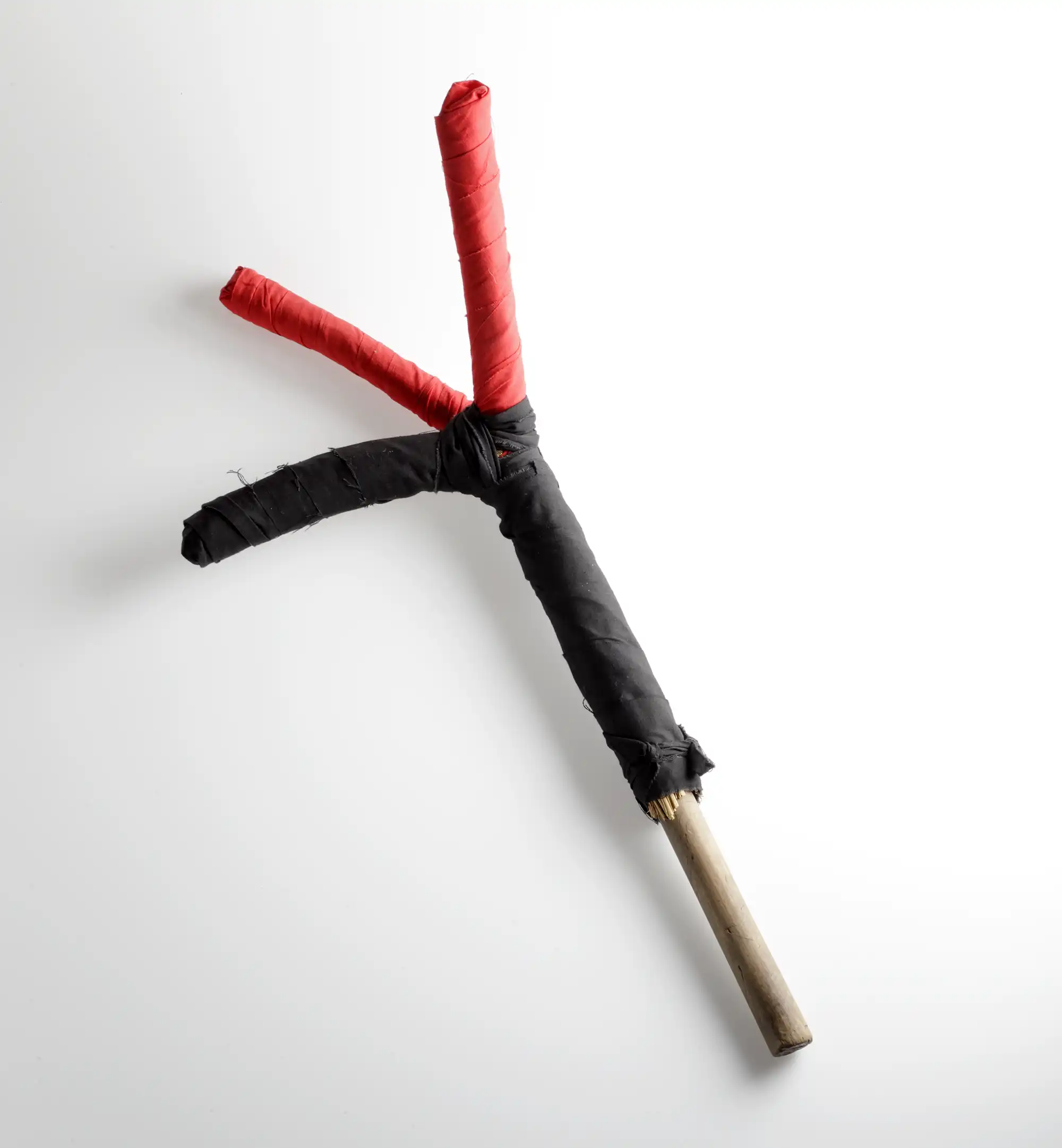 Figure 10 ‘Long-eared Bogey’ (kisar-ri), National Museum of Ethnology, Collection number H0062343
The voice recording for the kisar-ri was made with the cooperation of KAYANO Shigeru’s son, Mr KAYANO Shiro, now Director of the Kayano Shigeru Nibutani Ainu Museum in Biratori, Hokkaido. Kayano Shiro mentioned that he was too young to remember being scared by the kisar-ri, but recalled his father using a remodelled version of the tool to scare younger cousins who visited when he was older. In the modified version, his father attached a hannya mask (a female demon mask used in noh theatre), likely a gift from the mainland, to a stick, which he waved outside the window.
The aobazuku (Brown Hawk Owl) is a medium-sized owl that migrates across Japan during the summer. Its name in Ainu derives from its hoot, hocikok, and it is also called ahunrasampe—a monster from the otherworld. Although belonging to the same owl family, large owls such as Blakiston’s Fish Owl are revered as kamuy (spirit-deities), while medium to small owls are viewed as ominous. Children were told that the owl’s cry was the sound of a monster coming to take them away. The sound was procured from Ueda Nature Sound and used with permission.
Conclusion
The ears are organs that evolved over millions of years—probably even before humans became the species we are today—to detect potentially dangerous external stimuli with heightened sensitivity. Before any visible or tangible signs, sound warns the body to be on alert. Unidentifiable, uncanny sounds appear to have a direct link to physical sensations—the shivers and jitters—the body’s immediate reaction to perceived threat, while the mind remains momentarily uncertain.
In modern urban life, people inhabit a vastly different sonic environment (Oohashi 2003). Nowadays, there is so much constantly stressful noise in the environment that we too often want to plug our ears with pods and cancel out the external world. ‘Sounds of the Brink’ offered a sensory experience that awakened a kind of primordial awareness, refreshing and stimulating for some, unsettling for others.
What, I believe, gave the installation its innovative edge was the use of onomatopoeia. The idea of projecting words rather than images likely arose because, as a researcher of literature and narrative texts, I have long been fascinated by this expressive device that lies between sound, language, and image. As our research team member INOUE Masafumi aptly wrote in his contribution to our collective volume, onomatopoeia are “signs of struggle to express something that cannot be told in rational words.”「(オノマトペは)人々が理性的な言葉では語り得ないことを、無理にでも表現しようとしてきたあがき」(Inoue 2019).
A final point to be re-emphasised is that this experiment would not have achieved the same impact had we used digitally synthesised sounds. As I have already stated, it was essential that the sounds be ‘real’, recorded in specific times and spaces using binaural recording equipment, and reproduced through an adequate stereo surround system. What mattered was not only the physical depth or spatial dimensionality but also the historical and cultural depth embedded in each recorded sound. In this sense, the project is deeply indebted to the practitioners who have preserved these unique rituals, festivals, and storytelling traditions through the centuries.
Notes
- 1)
- I would like to acknowledge the contributions of the members of the Inter-University Research Project ‘The Marvelous and Uncanny: Comparative Study of the Imaginary’ conducted at the National Museum of Ethnology (2015.10-2019.3). This project was also financially supported by JSPS KAKENHI Grant Numbers JP24K00058; JP18H03573; JP16H06411.
- 2)
- This legend is said to be a source for the well-known folktale about Momotarō (Peach boy) defeating the band of oni on demon island together with his faithful animal servants.
- 3)
- The thumbnail is from "Kasuga ōmiya wakamiya sairei no zu (春日大宮若宮祭礼図)" owned by National Institute of Japanese Literature, retrieved from Union Catalogue Database of Japanese Texts (https://doi.org/10.20730/200017728).
- 4)
- I am deeply grateful to the camera and editing crew of Espa Corporation: OKABE Nozomu, KITABATAKE Kazuaki, NAKAMURA Nobuo, TAHARA Daichi.
- 5)
- The onomatopoeia animation was designed by KITABATAKE Kazuaki and IWATA Moe of Espa Corporation.
- 6)
- teamLab is an international art collective that produces immersive interactive installations created through the combination of advanced digital technologies and elements of the natural world.
References
- Bronstein, C. and C. Seulin (eds.)
- 2019
- On Freud’s “The Uncanny”. London: Routledge.
- Donnelly, K. J. and A. Mollaghan (eds.)
- 2023
- Haunted Soundtracks: Audiovisual Cultures of Memory, Landscape, and Sound. London: Bloomsbury Academic.
- Foster, M. D.
- 2009
- Pandemonium and Parade: Japanese Monsters and the Culture of Yōkai. Berkeley: University of California Press.
- Freud, S.
- 1919
- „Das Unheimliche’. Imago 5/6 (1919): 297-324.
- 2003
- The Uncanny. Translated by D. McLintock. London: Penguin Books.
- Guhr, S. and M. Algee-Hewitt
- 2023
- What’s that Scary Sound? Ambient Sound in Gothic Fiction. Journal of Computational Literary Studies 2 (1): 1-28.
- Haensch, K. D., L. Nelke, and M. Planitzer (eds.)
- 2019
- Uncanny Interfaces. Hamburg: Textem Verlag.
- Hand, R. J.
- 2018
- Uncanny Audio: The Place and Use of Sound in Gothic Performance. In K. Jones, B. Poore and R. Dean (eds.) Contemporary Gothic Drama: Attraction, Consummation and Consumption on the Modern British Stage, pp. 125–137. London: Palgrave Macmillan.
- Inaga Shigemi(稲賀繁美)
- 2019
- 「『耳』『声』『霊』―無意識的記憶と魂の連鎖について」山中由里子・山田仁史編『この世のキワ―〈自然〉の内と外』pp. 249-260, 東京:勉誠出版。(’Ears’, ‘Voices’, and ‘Spirits’: The Link between Unconscious Memories and the Soul. In Y. Yamanaka and H. Yamada (eds.) At the Brink of this World: Boundaries of the ‘Natural’ and ‘Supernatural’, pp. 249-260. Tokyo: Benseisha Publishing.)
- INOUE Masafumi(井上真史)
- 2019
- 「カランコロン考―怪談の擬音と近代化」山中由里子・山田仁史編『この世のキワ―〈自然〉の内と外』pp. 235-248, 東京:勉誠出版。(On the Karan Koron: Onomatopoeia in Uncanny Stories and Modernization. In Y. Yamanaka and H. Yamada (eds.) At the Brink of this World: Boundaries of the ‘Natural’ and ‘Supernatural’, pp. 235-248. Tokyo: Benseisha Publishing.)
- Kawada, Junzo (ed.)
- 1997
- Cultures Sonores d'Afrique. Tokyo: Research Institute for Languages and Cultures of Asia and Africa.
- Kayano Shigeru(萱野茂)
- 1978
- 『アイヌの民具』(Ainu Tools) 東京:すずさわ書店 (Suzusawa shoten)。
- 2014
- Ainu Tools. Translated by Ainu Tools English translation project. Tokyo: Yuideku.
- Komiya Masayasu (小宮正安)
- 2019
- 「西洋音楽史における『異界』表現―試論的考察」山中由里子・山田仁史編『この世のキワ―〈自然〉の内と外』pp. 221-234, 東京:勉誠出版。(Expressions of the Otherworldy in Western Music: a Tentative Analysis. In Y. Yamanaka and H. Yamada (eds.) At the Brink of this World: Boundaries of the ‘Natural’ and ‘Supernatural’, pp. 221-234. Tokyo: Benseisha Publishing.)
- Minami-Shinshū Anan-chō Niino Snow Festival Cultural Asset Management Committee (ed.)(南信州阿南町新野雪祭等資産化事業実行委員会編)
- 2017
- 『新野の雪祭り』(南信州民俗芸能調査報告書1)(Niino Snow Festival [Reports on Folk Performances of South Shinshū]). 阿南町:阿南町教育委員会 (Anan-chō Board of Education)。
- Ogawa Naoyuki(小川直之)
- 2010
- 「花祭り研究と上演―折口信夫を中心として」『神奈川大学国際常民文化研究機構年報』1: 148–157。(Studies and Performances of Hanamatsuri: Centering on Orikuchi Shinobu. Annual of International Center for Folk Culture Studies 1: 148-157.)
- Oohashi Tsutomu(大橋力)
- 2003
- 『音と文明―音の環境学ことはじめ』(Sound and Civilization: Environmental Science of Sound)東京:岩波書店(Iwanamishoten)。
- Oomichi Haruka(大道晴香)
- 2019
- 「死者の『声』を『聞く』ということ―聴覚メディアとしての口寄せ巫女」山中由里子・山田仁史編『この世のキワ―〈自然〉の内と外』pp. 267-279, 東京:勉誠出版。(’Hearing’ the ‘Voices’ of the Dead: Itako Priestess as Auditory Medium. In Y. Yamanaka and H. Yamada (eds.) At the Brink of this World: Boundaries of the ‘Natural’ and ‘Supernatural’, pp. 267-279. Tokyo: Benseisha Publishing.)
- Royle, N.
- 2003
- The Uncanny. New York: Routledge.
- Sasaki Satoshi (佐々木聡)
- 2017
- 「釜鳴をめぐる怪異観の展開とその社會受容」『人文学論集』35: 1-18。(A Common Idea of Mysterious Phenomena, 'Fuming' and its Change. The Humanities 35: 1-18.)
- 2019
- 釜鳴と鳴釜神事―常ならざる音の受容史」山中由里子・山田仁史編『この世のキワ―〈自然〉の内と外』pp. 261-266, 東京:勉誠出版。(Cauldron Sounding and Narukama Ritual: A Cultural History of Uncanny Sounds. In Y. Yamanaka and H. Yamada (eds.) At the Brink of this World: Boundaries of the ‘Natural’ and ‘Supernatural’, pp. 261-266. Tokyo: Benseisha Publishing.)
- Todorov, T.
- 1970
- Introduction à la littérature fantastique. Paris: Seuil.
- 1973.
- The Fantastic: A Structural Approach to a Literary Genre. Translated by R. Howard. Ithaca: Cornell University Press.
- Tsunemitsu Toru(常光徹)
- 2017
- 「怪音と妖怪ー聴覚と怪異現象」小松和彦編『進化する妖怪文化研究』pp. 36-50, 東京:せりか書房。(Strange Sounds and Yokai: Auditory Senses and Uncanny Phenomena. In K. Komatsu (ed.) Evolving Yokai Culture Studies, pp. 36–50. Tokyo: Serica Syobo.)
- Van Elferen, I.
- 2012
- Gothic Music: The Sounds of the Uncanny. Cardiff: University of Wales Press.
- Vidler, A.
- 1992
- The Architectural Uncanny: Essays in the Modern Unhomely. Cambridge: MIT Press.
- Yamanaka Yuriko(山中由里子)(ed.)
- 2019
- 『驚異と怪異―想像界の生きものたち』(REGNUM IMAGINARIUM: Realm of the Marvelous and Uncanny) 東京:河出書房新社 (Kawade shobo shinsha)。
- Yamanaka Yuriko and Yamada Hitoshi (eds.)(山中由里子・山田仁史編)
- 2019
- 『この世のキワ―〈自然〉の内と外』(At the Brink of this World: Boundaries of the ‘Natural’ and ‘Supernatural’) 東京:勉誠出版 (Benseisha Publishing)。
- Yasui Manami(安井眞奈美)
- 2014
- 『怪異と身体の民俗学ー異界から出産と子育てを問い直す』(Folklore Studies of the Spiritual and the Body: Rethinking Childbirth and Childrearing from the Spiritual World) 東京:せりか書房 (Serica Syobo)。
Websites
- Kibitsujinja
- 2021
- Narukama Ritual. https://www.kibitujinja.com/en/about/narukama.php (accessed June 28, 2025)
Films
- Abe Hirohisa(阿部博久)
- 1981
- 「新野の雪祭り―神々と里人たちの宴」(Yuki Matsuri [Snow Festival] in Niino --- Festivity of Gods and Villagers). Documentary Film by ポーラ伝統文化記録映画 (Pola Foundation of Japanese Culture), 0:30.
- Noda Shinkichi(野田真吉)
- 1980
- 「ゆきははなである 新野の雪まつり」(Snow as Flowers: Niino’s Snow Festival). Niino, Nagano, 2:09.
- Sakurai Hiroto(櫻井弘人)
- 2017
- 「新野の雪祭り(南信州民俗芸能記録映像1)」(Niino Snow Festival [Documentary on Folk Performances of South Shinshū 1]). 南信州阿南町新野雪祭等資産化事業実行委員会 (Minami-Shinshū Anan-chō Niino Snow Festival Cultural Asset Management Committee), 4:45.
- Yamanaka Yuriko(山中由里子)
- 2019a
- 常ならざる音:耳を通して異界とつながる」(Eerie to the Ear: Connecting with the Otherworld through Sound). Distributed by the National Museum of Ethnology, Osaka, 0:33.
- 2019b
- Onomatopoeia animation made for the ‘Sounds of the Brink’ installation. Animation by Espa Corporation, 8:33.
https://vimeo.com/1133357544 (Retrieved March 27, 2026) - 2019c
- Explanation video about the ‘Sounds of the Brink’ onomatopoeia. Shown at the Special Exhibition REGNUM IMAGINARIUM: Realm of the Marvelous and Uncanny, National Museum of Ethnology, Osaka, 12:52.
https://vimeo.com/1133358858 (Retrieved March 27, 2026) - 2024a
- Onomatopoeia animation of kisar-ri. Voice recorded in Biratori, Hokkaido with the cooperation of KAYANO Shiro. Animation by Espa Corporation, 0:49.
https://vimeo.com/1133374371 (Retrieved March 27, 2026) - 2024b
- Onomatopoeia animation of the hoot of aobazuku (Brown Hawk Owl). Sound source UEDA Nature Sound. Animation by Espa Corporation, 0:14.
https://vimeo.com/1133375192 (Retrieved March 27, 2026) - 2026a
- Narukama oracle at Kibitsu Shrine. Filmed on December 13, 2017 in Kibitsu, Okayama by Espa Corporation, 11:40.
https://vimeo.com/1133347810 (Retrieved March 27, 2026) - 2026b
- The relocation ceremony of the Kasuga Wakamiya On-matsuri. Filmed on December 17, 2017 in Nara by Espa Corporation, 5:53.
https://vimeo.com/1133347817 (Retrieved March 27, 2026) - 2026c
- Ranjō at the Niino Snow Festival at Izu Shrine. Filmed on January 14-15, 2018 in Niino, Nagano by Espa Corporation, 2:45.
https://vimeo.com/1133351372 (Retrieved March 27, 2026) - 2026d
- Yokkabui Festival at Konpō-chō, Kagoshima. Filmed on August 21, 2017 at Konpō-chō, Kagoshima by Espa Corporation, 3:23.
https://vimeo.com/1133353180 (Retrieved March 27, 2026) - 2026e
- Rakugo-ka KATSURA Kujaku performing Sarayashiki. Filmed on November 9, 2018 at the Toyonaka City Traditional Performing Arts Center by Espa Corporation, 0:21.
https://vimeo.com/1133355591 (Retrieved March 27, 2026) - 2026f
- ‘Sounds of the Brink’ installation in the Special Exhibition REGNUM IMAGINARIUM: Realm of the Marvelous and Uncanny. Held at the National Museum of Ethnology, Osaka (August 29-November 26, 2019), 3:04.
https://vimeo.com/1133356447 (Retrieved March 27, 2026)
Contact
Yuriko Yamanaka
*Replace “■” with “@”.